Showing posts with label Art. Show all posts

Thursday, August 19, 2010

Yet Another 10 Artistic Uses of Ordinary Things


Art satisfies the soul. It makes us appreciate things we normally take for granted. Feast your eyes and soul on these ten amazing artworks, made from otherwise ordinary objects, proof of how art can make us see the world differently.


#10 - Coffee

10

Sunshine Plata of Manila, Philippines, creates whimsical paintings with a difference: instead of oil or acrylic paint, she uses coffee as her medium. Inspired by an exhibit of 19th-century artworks done in coffee, Plata creates entrancing sepia images of fairies and religious figures from the aromatic beverage. Her paintings proved to be so unique and beautiful, that on her first solo exhibit of caffeine art (entitled ‘L.S.D. (look, smell, discover) Trip by Caffeine’), only seven of the thirty-two works exhibited were left unsold.


#9 - Chicken Wire

9

Ivan Lovett of Queensland, Australia, creates remarkably lifelike busts of famous icons such as Salvador Dali, Bob Dylan and John Lennon, from ordinary chicken wire. Each one of the highly-detailed pieces takes around three weeks to finish.


#8 - Rice Crops

8

Every year since 1994, the small village of Inakadate, located in the Minamitsugaru District in Aomori, Japan, creates astonishing images in their rice fields to draw tourism to the place. The pictures are made using two types of rice plants: the purple or yellow-leafed “kodaimai” rice and the green-leafed tsugaru-roman rice. The giant pictures are visible until September, when the crops are harvested.


#7 - Typewriters

7

Jeremy Mayer sculpts anthropomorphic figures out of vintage typewriter parts. The metal creations were made without the aid of welding or adhesives. Some of his life-sized works contains parts from roughly 40 typewriters and could take a thousand hours to create.


#6 - A4 Paper

6

Peter Callesen creates incredible cut-out sculptures of skeletons and buildings out of single sheets of A4 paper. Callesen remarked on his unusual medium: “I find the A4 sheet of paper interesting to work with, because it is probably the most common and consumed media and format for carrying information today, and in that sense it is something very loaded. This means that we rarely notice the actual materiality of the A4 paper. By removing all the information and starting from scratch using the blank white 80gsm A4 paper as a base for my creations, I feel that I have found a material which we all are able to relate to, and at the same time is non-loaded and neutral and therefore easier to fill with different meanings. The thin white paper also gives the paper sculptures a fragility which underlines the tragic and romantic theme of the works.”


#5 - Balloons
5

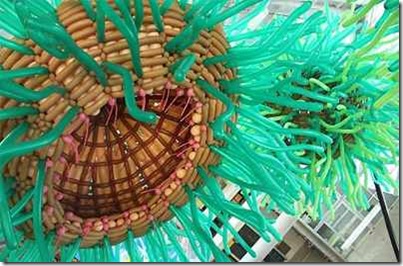
New York artist Jason Hackenwerth uses thousands of colorful balloons to create amazing installations that resembles alien creatures. As many as 3,000 individual balloons go into each piece, and each piece can take up to 25 hours to finish.


#4 – Smoke

4

Using a special camera with a fast shutter speed, Graham Jeffrey captures amazingly beautiful pictures of smoke. Using incense sticks as the smoke source, Jeffrey preserves images of the ephemeral subject, adding color and manipulating the smoke to make enchanting shapes and forms.


#3 - X-Rays
3

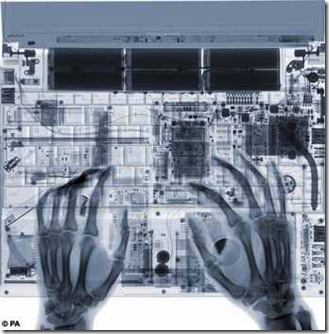
Nick Veasey of Kent, England, turns the mundane into the magnificent by X-raying ordinary objects, and turning the photographic results into art. While working as a photographer/designer for a television company, he was tasked to X-ray a truck full of soda cans to find a can containing a prize-winning ring pull. After three days without a winner, he X-rayed his sneaker out of boredom. Fascinated by the result, he was duly inspired, and after three months of exploring and experimenting with the medium, Veasey has perfected his unusual art. Using an abandoned radar station as his studio, Veasey creates ghastly yet stunning X-ray images of various animals, a DJ holding a microphone, a man riding a bike, a tractor, and even a bus loaded with people. But Veasey’s most ambitious X-ray project as of yet is a 20,000 square-feet X-ray of a hangar containing an entire Boeing 777 jet, making it the largest object ever X-rayed.


#2 - Electricity
2

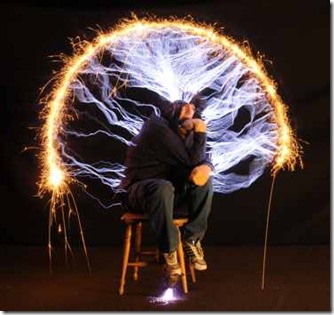
Australian Peter Terren likes playing with electricity. He does what he calls the ‘Holy Art of Electrickery,’ which is basically creating spectacular art made of pure electricity. Using an electric transformer called a Tesla coil (that he built himself ) that shoots out bolts of electricity (called plasma), Terren photographs these electric discharges, using long exposures to capture impressive images of electric ‘sculptures’ that danced through the air. Terren sometimes even incorporates himself into his photographs, like in his rendition of the famous sculpture ‘The Thinker’. Despite the unreal nature of the images, Terren insists that there is no Photoshopping involved in the production of his pictures, and only slight alterations were made to them post-production.


#1 - Food

1

Carl Warner gets the top spot on this list for his brilliantly realistic photographs of landscapes, which are created entirely from food. Warner, a London-based photographer, uses various food items like vegetables, fruits and bread, to create amazingly detailed dioramas, and photographs them for posterity. The dioramas, nicknamed ‘foodscapes’ , were made atop an eight feet by four-feet table, with the assistance of model-makers, and the scenes depicted ranged from a broccoli forest to a smoked-salmon sea in sunset. Warner photographs each scene multiple times, then he edits the images on a computer to produce the striking images.

read more...

Monday, June 14, 2010

12 Craziest Light Switches


1

Have you ever thought about using a light switch as an ad space? Well, Viagra did, and it was a hell of a funny idea.


2

The person who created this probably meant well, but seriously, what comes to your mind when you see this light switch?

3

This light switch hook, provides a hanging function when in the OFF position. It is a fully functional light switch. It was designed to persuade people to use less energy by providing a power saving incentive. You can either hang something on it or turn the light ON – you can't do both.

4

This light switch is creative and funny. It features the breasts of a woman and her nipples are the On/Off control.

5

The MAGI light and switch concept was sponsored by ARTEMIDE.. With this concept you get a two-part team that tangos together to perform a synchronized dance. Rotate the power switch and the overhead lamp progressively opens to reveal the light. Like the glorious sun shining over you, urging you to feel your inner light, the MAGI beams through.

6

Teaching the importance of energy conservation is the goal of this design from Tim Holley. He calls it Tio, and it's a ghost-shaped light switch that gives kids a visual reminder of how much energy they've used by leaving lights on. Tio starts out green and smiling. If the light is left on for more than four hours, he turns yellow and looks shocked. And if you dare to leave that light on for more than eight hours, sweet little Tio turns into a raging red hulk, complete with frowny mouth and angry eyes. But he won't just visually remind your kids about their energy habits; information from the light switch is sent to Tio's computer program so the entire family can see how they're doing. In a brilliant piece of visual positive reinforcement, Holley's program lets kids grow a “virtual tree” which gets bigger and healthier the more energy they save.

7

Light switches are the new home accessories to fall in the Swarovski trap. The idea of using a Swarovski crystal as a light switch is quite weird but the crystal would definitely deck up your wall. No wonder the design has already won the ‘Design Plus award 2008'. What stands behind the polished crystal shell is a complex optical detection system to make it work properly. Also, the Swarovski switch can be put to good use not only to turn on and off the light, but to manipulate other household items too. Produced and customized by Berker, the Swarovski light switches will add a touch of elegance to your home decor and will attract quite a few stares too.

8

In the same vein as Scott Amron's "Off" light switch, where you have to pick between hanging up your jacket or turning on the light, comes "Energy Savings," a design-as-art statement that changes a standard light switch from consumption to conservation. It gives new meaning to the term "energy savings," and it's one of the most interesting piggy banks we've ever seen.

9

Your guests will be perplexed when they see this Areaware light switch encased in a Lucite box. Is the switch protected for some reason? Will the house explode if the switch is flipped? Should they attempt to break the Lucite in case of emergency? None of the above. The presence of this switch just means you're weird, lazy and have $250 to blow on a gold-colored remote-control on-off light switch. Wish it were cheaper? You're in luck — there's a silver-colored model for $150. No matter the color, we get the subtle humor.

10

These iconic switch plates allow their owners to think inside and outside the box at will – always a creative's prerogative. Deceptively simple, these functional and dimensional wall graphics raise a host of questions. Is the light switch being shaded or displayed? Is it possible to gain and lose perspective simultaneously? From online creative entrepreneur team Design Glut.

11

This concept light switch shows a map of your home with the location of lights indicated by light bulb icons. Pressing any of the icons turns on the corresponding light. What a bright idea.

12

Pool Ball Light Switch.

read more...

Friday, June 4, 2010

15 Cool Concept Cell Phones


Cell phone concept designs are often crazy yet cool. When concept phones are also eco-friendly, then their awesomeness rocks the charts. These 15 futuristic green gadgets are creatively cool concept cell phones and accessories that we’d love to see developed and on the mainstream market soon.


1

1_1

Designers Seungkyun Woo and Junyi Heo were inspired by photosynthesis. The Leaf cell phone is a wearable bracelet phone that accumulates power from solar cells on its front panel. As a backup, it also can be recharged with electricity. The Leaf offers high-tech fashion and function, however its main objective is to “remind people that they can contribute to energy efficiency.


Mechanical Mobile Spin Finger Phone


2

Designer Mikhail Stawsky came up with the Mechanical Mobile, a concept cell phone that can be charged by spinning it around your finger. Touchscreen technology meets the Wild West? This design might be for the modern day cowboy. Like gunslingers of old, the quickest draw to twirl and power their phone wins?


Biodegradable Grass Cell Phone


3

Je-Hyun Kim designed a cell phone meant to last only for as long as the length of its functional life cycle. The grassy casing on the Natural Year Phone concept will slowly dissolve, leaving the keypad and screen to be recycled. This biodegradable phone is a great idea, but you might want to avoid using it on a rainy day.


Mobile Script Phone

 4

Designer Aleksandr Mukomelov created a sleek, thin cell phone concept that sports two touch screens. One is a traditional screen and the second is a flexible OLED screen that stiffens when you unroll it. The Mobile Script phone has most any feature you might want, like internet access, documents on the go, games, communication, and mobility. Can it get any better? Oh yes. You don’t ever need to recharge this phone. The case is coated with a photo sensitive nano material that converts sunlight into energy.


Scrap Wood Phones


5

Touch Wood concept phones are made from cypress wood scraps. The protective coating allows these biodegradable phones to be waterproof, insect-proof, and mold-proof. Touch Wood phones have a touch screen and camera.


Kinetic Flexible OLED Cell Phone

 6

 6_1

If you are a rabid texter, then this concept phone might be for you. Kyocera’s Eos folding concept phone “feeds off of our physical interaction with it, translating kinetic energy into an electric charge via an array of nano-scale piezoelectric generators. The more we interact with Eos, the more energy it creates – without using batteries.” The flexible OLED screen can fold to wallet-size, able to open and close with shape memory.


OLED Roll Phone

7

Designer Tao Ma has created the world’s shortest roll-up phone. The display screen rolls up so the entire phone is about the size of film canister. The tiny keypad roll might prove challenging to keep from making fat finger typos. It does run on batteries but the OLED screen makes it eco-friendly.


Tenna

8

 8_1

Designer Yuree S. Lim created a screen-less phone that uses voice recognition-based UI. The 1.5 inch Tenna cell phone concept breaks down into a detachable ear piece and a USB mini port. Plug Tenna in and it transforms any gadget with a screen into a cell phone.


Motorola Origami

9

Origami, a Motorola concept cell phone, is made of thin segmented “technostuff.”  It “can be folded into different forms to serve different functions: phone, recording device, camera, and, presumably, a pointy paper crane.”


Coke Powered Phone

10

 10_1

Daizi Zheng designed a cell phone to run on Coke. Her design has the potential to operate three to four times longer on a single charge than conventional lithium batteries. She wrote, “The concept is using bio battery to replace the traditional battery to create a pollution free environment. Bio battery is an ecologically friendly energy generates electricity from carbohydrates (currently sugar) and utilizes enzymes as the catalyst. By using bio battery as the power source of the phone, it only needs a pack of sugary drink and it generates water and oxygen while the battery dies out.”


Finger Phone


11

Do you talk with your hands? Then this concept phone may be for you. Finger Touching is a wearable mobile device for enhanced chatting. Excluding the thumb, each finger joint makes up 12 buttons for input.


Camera-Projector-Printer Phone


12

Designer Hideo Kanbara created a phone that is truly full-featured and meant for multitasking. Much more than a cell phone, it also functions as a game controller, photo printer, and projector.


Sticker Cell Phone


13

13_1


Designer Liu Hsiang-Ling considered that people place their phone close to a window to pick up better signal reception. The Sticker Phone has a solar panel on the back. The shape is slightly arched so the phone will stick via suction onto a window to charge.


Viber Burst Kinetic Energy Charger


14

Josh Pell developed a concept charger known as Viber Burst. It harnesses the power of motion to charge a cell phone. Viber Burst can be carried in your pocket, your purse, or even attached to your shoe. Once fully charged the device can dump all that energy into your cell phone’s battery in just two seconds.


Cell Phone Battery Concept Charges with a Flick of a Finger

 15

Designers Song Teaho and Hyejin Lee may not call this a “green” concept, but finger powered batteries are eco-friendly. If your cell phone is running low on battery power, you pull out the battery and spin it around your index finger. It will be recharged long enough to let you have a conversation or to get to a electrical charger. It would be great to see this developed to last longer.

read more...

Thursday, May 27, 2010

10 Recycled Critter Collections

Human beings have relied on the innate warmth and coziness of animal skins for ages, and back in the day with sub-zero temperatures swirling about and the threat of snarling, chronically hungry prehistoric animals at every turn, it made sense to make the most of what remained following a heart-throbbing hunt. Despite the eventual creation of a highly profitable industry built around raising creatures for the sole purpose of harvesting their lush coats, the practice is in our current day and age increasingly considered not only inhumane but also entirely unacceptable now that we’ve developed perfectly viable vegan alternatives. Those who are eco-sympathetic may feel that it is wrong to kill an animal and profit from the sale of its skin, but what about recycling perfectly usable critter body parts when random creatures have met their untimely demise underneath cars, as the result of ill-placed power lines or following a mishap with an immaculately clean office building window? As you will see below, there are more than a few fashion designers and their creative (or morbidly?!?) inspired compadres who pursue the darker side of animal recycling in an effort to craft left-of-center fashion statements that purportedly celebrate the lives of those whose candles have burned out well before their time.


Iris Schieferstein

IRIS-SCHIEFERSTEIN-FINAL

It’s one thing to strut your stuff while wearing the skin of a sacrificed alligator or cow, but once you dare to literally hoof it while sporting recognizable body parts or dead-on, fully intact critters…wellllll, let’s just say that that’s where many fashionistas would easily draw the line. German artist Iris Schieferstein has certainly gone where no other creative minded animal recycler has gone before by fashioning what-the-huh? footwear out of hedgehog bodies, once soaring white doves and now dead-as-a-doornail horsie feet. Certainly striking, these inarguably practical fashion staples nonetheless provoke one to declare a piercingly audible, “Neighhhhh!!!!”


Reid Peppard’s RP/ENCORE

REID-PEPPARD

Unlike many of her taxidermy contemporaries who fail to clearly identify precisely how they source the subject of their works, Reid Peppard has long been very transparent about using city casualties that have been found rather than hunted. While it’s not surprising that many find her distinctive brand of fashion rather repulsive, the self-confessed vegetarian sees nothing wrong with transforming what would have normally gone to waste into beautiful personal adornments that might potentially have the power to change the general perception of city-dwelling vermin and garden variety rodents. Interestingly, Peppard has commented that many of her naysayers will “wear leather without thinking…eat meat, drive cars that pollute the atmosphere (and) then turn around and say that my taking waste and preserving it is somehow wrong.” Good point. Now who’s this close to buying her pristine white rat carcass coin purse? Hello? Any takers? Rat purse anyone?


April Hale

APRIL-HALE

For those who experience a serious case of the heebee-jeebies when it comes to the mere mention of the words rat purse, April Hale’s line of roadkill jewelry (with no heads attached) may be just what the doctor ordered. Why must we continue farming conventional forms of fur, anyway? Imagine going cold turkey on the fur industry altogether and instead repurposing the hides of anything that perishes due to natural or city-livin’ causes? There’s certainly a seemingly endless supply…   Hale — who also happens to eschew meat — was inspired to pursue this unconventional fashion niche following an unfortunate incident in which a squirrel pulled a deer-in-headlights moment by freeze-framing underneath the tire of her car. She now pays her bills by transforming all manner of flattened critters (house pets excluded) into quirky adornments that celebrate the simple beauty of what we take for granted.


James Faulkner

JAMES-FAULKNER

Brits tend to dabble in the quirky side of life (or death as the case may be),  but in their defense, they are also far more likely to exercise sustainable behaviors due to a deep-seated eco-awareness that permeates their culture. Scotland-born James Faulkner initially applied his green inclinations on a grand scale by transforming a dearly departed magpie located on the side of the road into a show-stopping headpiece for a friend’s wedding. With ooohs, aaahs and many follow-up orders under his belt, Faulkner soon found himself smack dab in the middle of a dandy little business that allowed him to exercise his artistic inclinations while also honoring his belief in treading lightly on the earth. Stating that he hopes to “maintain the beauty of these creatures” with his hand-crafted millinery, he is opposed to “farming for fashion, which is why (he) sources all of (his) materials as much as possible.”


Lady Lavona

LADY-LAVONA

Fancy a gnarly-looking bird claw, set of critter choppers or a brawny black beak dangling from your neck? Then Lady Lavona is your gal, conjuring up all sorts of beastly anthropomorphic fashion adornments that pay homage to the macabre Victorian-era penchant for recycling bits and pieces of animals bagged in hunting excursions. While she sources some of her inventory straight from 16th – 19th century stockpiles — including vintage animal hoof necklaces and full spreads of miniature fangs — a great deal of what she sells is self-designed, such as her wildly popular crows feet amulets accented with an artful tangle of earth-toned semi-precious jewels. One thing that Lady Lavona wants prospective buyers to know about her collection is that her animal trinkets are legitimately recycled, unlike those of her competitors that “are bred in captivity for the sole purpose of being sold to human consumers…labs, pet stores, etc.” and yet billed as never being killed for the sole purpose of becoming one of their end products.


Wim Delvoye

WIM-DELVOYE

Judging from current industry statistics, the pork biz is doing oinkingly well — by golly, it’s the top animal-based protein source consumed in America! While the other white meat is deeply entrenched in our food chain, we rarely stop to think about how piggy parts are typically recycled. Aside from the bazillion rawhide ears that man’s best canine friends typically snack on in the span of one year or the potted pig meat wonder that we guiltily fry up in a pan (most commonly known as Spam) — porcine skin is also used in the fashion world…but how about pre-tattooed pig skin accessories? Wackadoodle Belgium artist Wim Delvoye has made this seemingly inhumane concept a very real reality on his Beijing-operated ‘art farm’ (the location specifically chosen due to the lack of animal rights concerns). It is there that he and his staff of master tattoo artists brand live (but fortunately sedated) pigs slowly but surely with all sorts of varied images and then allow them to grow to slaughter weight, tan their skins and then either sell the resulting canvases as art, use them as the foundation for custom fashion accessories or taxidermy entire creatures to sell to well-heeled consumers who think nothing of staring eye-to-eye at their specially ordered critter casualties.


Maximilian’s Pet Shop

PETS-AS-TROPHIES

Katie Higgs and Ella Kigour — the masterminds behind Maximilian’s Pet Shop — know just how ga-ga we are for our pets, so in a nod to the celebrity trend of dragging petite creatures along with us on mundane shopping excursions, the design team has conceived of a way for mere mortal no-names to do the same while employing a dash of conversation-starting-style. Sure, they have a few designs — such as their burrow friendly rodent accessible sweaters/scarves and bird cage purses — that enable still alive and kicking creatures to see the world with their pet guardians in tow. What is particularly creepy, however, is their Taxidermy Kitty Carrier which, while technically not a fashion accessory per se, still deserves to a place in the annals of extreme eco-fashion since those who are desperately smitten with their departed kittens might feel inclined to show the whole world just how sweet their whiskered face once was (and still is thanks to the modern wonder of well-executed taxidermy). Anyone squirming yet?


Loved To Death

LOVED-TO-DEATH

Oh goodness gracious…squirrel paw and bird head jewels?!?! Oh sure, why not! The folks at Loved To Death — who by the way have been very publicly accused of misleading their buyers by claiming that no animals were intentionally killed to create their pieces — made headlines with their instantly heart-sinking Polly-no-longer-want-a-cracker pendant, and with good reason. The instantly recognizable parrot, often found in the homes of many-an-animal-lover, never did anyone wrong aside from randomly chomping down on pokey, chronically inquisitive fingers for no particular reason. Not that such an unwelcome action deserves being beheaded and mounted on a silver-plated shield. Sigh. Parrots of the world…be forewarned.


Julia DeVille’s Disce Mori Collection

DISCE-MORI

‘Learn to Die’ doesn’t sound like a very nice name for a company, and yet Julia DeVille’s appropriately Latin-named taxidermy-based company isn’t billing itself as anything other than being a haven (or fashionista pedestal, if you will) for the preserved bodies and random parts of creatures that have passed over to the other side.  The natural born Kiwi who now calls Australia her home intentionally utilizes “symbols of mortality” that have perished au naturel in an effort to inspire wearers to “contemplate their own mortal existence and, in turn, appreciate the significance of life.” The result is a collection of crumpled, bejeweled and tah-dahhh fashion statements that are oddly compelling yet flat-out freaky-deaky…great for the fashion-forward goth enthusiast or been-there-done-that rock star who really wants to get tongues flapping.


Custom Creature Taxidermy

CUSTOM-CREATURE-TAXIDERMY

Embracing a ‘waste not, want not’ mentality, wildlife rescue/rehabilitator/conservationist Sarina Brewer — who feels that animals are just as beautiful in death as they were while alive — proudly recycles every single animal body or component that passes through her hands. Typically reincarnating the bodies of creatures with varying circumstances (think roadkill, animals that are deemed as pests, pet trade casualties and discarded cattle), the Science Museum of Minnesota volunteer is an odd breed in that she is not only a self-confessed science nerd but also an artist who creates oil-based paintings, sculptural works and wearable fashion accoutrements. If her $45 grouse foot necklace doesn’t grab you, then her $55 coiled rat tail necklace, preserved raccoon heart or mummified kitten paw earrings surely will. The good news for sustainably-minded consumers is that you can take your eco-purchase one step further by repurposing many Custom Creature Taxidermy jewelry pieces as makeshift back scratchers — hmmm, on second thought, perhaps that extracurricular application might kick your itch into overdrive!

read more...