Showing posts with label animals. Show all posts

Sunday, August 15, 2010

Top 10 Cryptids That Turned Out to be Real


Cryptozoology, the study of “hidden animals”, concerns itself with animals whose existence has not yet been recognized by mainstream science. These animals, known as “cryptids”, are often the stuff of legends, written off as myths or elaborate hoaxes. Some famous cryptids are Bigfoot, the Loch Ness Monster, and El Chupacabra, all of which remain shrouded in mystery. However, many animals widely recognized today were once among these cryptids. The following ten creatures were once dismissed by science as products of folklore, imagination, or deception, but are now formally recognized as their own species.

For the sake of consistency, animals falsely thought to be extinct have not been included (coelacanth, Chacoan Peccary, ivory-billed woodpecker).


#10 - Devil Bird
10

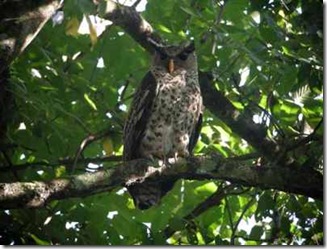
The Devil Bird, or Ulama, is a frightening horned bird of Sri Lankan folklore. This elusive creature is rarely seen, but is often heard in the form of its infamous, blood-curdling screams. Its cries are said to resemble a wailing woman and are perceived by locals as an omen of death. For centuries, the nocturnal cries of the Devil Bird were the only evidence of its existence; Western science wrote if off as mere superstition.

Then, in 2001, the Devil Bird was identified as a new species of owl, the spot-bellied eagle owl (bubo nipalensis). The largest of all Sri Lankan owls, the bubo nipalensis matches the description of the Ulama perfectly, down to its characteristic screech and tufted “horns”. Although some debate still remains as to the true identity of the Devil-Bird, the spot-bellied eagle owl stands as the most compelling source of inspiration for this mysterious creature.


#9 - Ziphius

9

In Medieval folklore, the Ziphius, or “Water-Owl”, was a monstrous nautical creature said to attack ships in the northern seas. It possessed the body of a fish and the head of an owl, complete with massive eyes and a wedge-shaped beak. “Ziphius”, meaning “sword-like” in Latin, may refer to the beast’s fin, which was said to pierce the hulls of ships like a sword.

Today, the inspiration for the Ziphius is known as Cuvier’s Beaked Whale, a widespread species of beaked whale. Also known as the Goose-beaked whale, this creature is found as far north as the Shetland Islands and as south as Tierra Del Fuego at the tip of South America. It is the only member of the genus Ziphius, which bears the name of its legendary identity. Some additionally attribute the inspiration of the Ziphius to the orca or the great white shark, based on some depictions of the beast as a predator to seals.


#8 - Bondegezou

8

The Bondegezou (“man of the forests”) is a legendary, ancestral spirit of the Moni people in Western Indonesia. Described as a tree-dwelling creature, the Bondegezou resembles a small man covered in black and white fur. It is said to be a tree climber, but often stands on the ground in a bipedal stance.

In the 1980s, a photograph of the Bondegezou was sent to Australian research scientist Tim Flannery, who initially identified the creature as a young tree kangaroo. But in May, 1994, Flannery conducted a wildlife survey of the area and discovered that the animal in the picture was new to science. The Dingiso (Dendrolagus mbaiso), as the creature is also known, is a forest-dwelling marsupial with bold coloration that spends most of its time on the ground. The Dingiso remains a rare sight – the first real evidence of the creature was only skins, and to this day, no Dingiso exists in captivity.


#7 - Kangaroo

7

Early explorers to Australia described bizarre creatures never before seen by Europeans. They wrote of creatures with heads like deer that stood upright like men and hopped like frogs. The creatures sometimes sported two heads – one on their shoulders, and one on the stomach. Such accounts were understandably disregarded and ridiculed by fellow colleagues.

That changed in the 1770s, when a dead specimen of this odd beast was exhibited in England as a public curiosity. Today, this creature is known as the kangaroo, a widespread marsupial endemic to Australia. Well-known for their leaping abilities and the female pouch for carrying young (marsupium), kangaroos are a nationally recognized icon of Australia. Four species of kangaroo exist: the Red Kangaroo (Macropus rufus), the Western Grey Kangaroo (Macropus giganteus), the Western Grey Kangaroo (Macropus fuliginosus), and the Antilopine Kangaroo (Macropus antilopinus).


#6 - Platypus
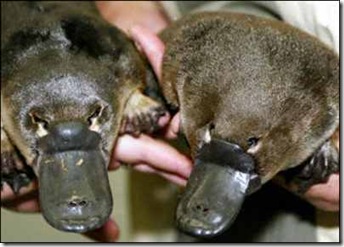
6

When European naturalists first encountered this bizarre creature, they were understandably baffled. Accounts described it as a venomous, egg-laying mammal with a duck bill and beaver tail. Many prominent British scientists deemed it a hoax when presented with a sketch and pelt, in 1798. Even when offered a corpse, scholars suspected that it was an elaborate, sewn-together fraud.

Today, this bizarre but fascinating creature is known as the platypus, one of only five extant monotremes (egg-laying mammals). While formerly recognized by science, it is no less unique today: this semi-aquatic creature, native to eastern Australia, swims with webbed feet, uses electrolocation to hunt, and possesses an ankle spur that, in males, can deliver a powerful injection of venom. While non-lethal to humans, this venom is excruciatingly painful and is not responsive to most pain-killers.


#5 - Sea Serpent

5

For centuries, the Sea Serpent persisted as the most captivating cryptozoological mystery in the world. Sightings of these mysterious, and often frightening, creatures have occurred plentifully throughout history, even up until the early twentieth century. From northern European waters to the Eastern North American coast, tales of serpentine, aquatic beasts of colossal proportions dot the globe. Their descriptions vary, ranging from horse-headed creatures to massive snakes.

Cryptozoologists speculate that various misidentified animals can account for Sea Serpent sightings. However, one elusive species is a particularly likely source for many of these accounts. The oarfish (or ribbonfish) is a massive, elongated fish found worldwide. It is the longest of all bony fish, the largest recorded being 17 meters (56 ft) in length. Oarfish typically dwell in the deep ocean, but are occasionally washed ashore in storms, and linger at the surface near death. A live oarfish was filmed for the first time in 2001, demonstrating its rarity and reclusive nature.


#4 - Komodo Dragon

4

By the early twentieth century, Western science had determined that giant lizards were nothing more than a relic of the prehistoric past. Thus, when pearl fishermen returned from the Lesser Sunda Islands, in Indonesia, with tales of monstrous “land crocodiles”, their accounts were met with overwhelming skepticism. An expedition from the Buitenzorg Zoological Museum, in Java, produced a report of the creatures, but the legendary dragons of Komodo faded into obscurity as World War I took precedence.

Then, in 1926, an expedition from the American Museum of Natural History confirmed that the tales of giant lizards were true. W. Douglas Burden, the leader of the expedition, returned with twelve preserved specimens and two live ones. The world was introduced to the Komodo Dragon, a massive monitor lizard that grows up to ten feet, making it the largest lizard in the world. Komodo Dragons possess massive claws and fangs with which they can kill almost any creature on the island, including humans and water buffaloes. One particularly bizarre attribute of these creatures is their venomous bite, which has been attributed to bacteria-laden saliva or venom glands in the mouth.

The 1926 expedition to Komodo served as the inspiration for King Kong, in which a similar expedition to a foreign island reveals prehistoric megafauna.


#3 - Mountain Gorilla

3

For centuries, tales of large “ape-men” in East Africa have captivated explorers and natives alike. Numerous tribes have legends of massive, hairy creatures that would kidnap and eat humans, overpowering them with their ferocity and strength. The creatures go by many names, among them ngila, ngagi, and enge-ena. In the sixteenth century, English explorer Andrew Battel spoke of man-like apes that would visit his campfire at night, and in 1860, explorer Du Chaillu wrote of violent, bloodthirsty forest monsters. Up until the twentieth century, many of these tales were ignored or discounted.

In 1902, German officer Captain Robert von Beringe shot one of these “man-apes” in the Virunga region of Rwanda. Bringing it back to Europe with him, he introduced the world to a new species of ape: the mountain gorilla (Gorilla Gorilla Beringe, in Beringe’s honor). Today, mountain gorillas are known to be communal, largely docile herbivores that live in the Virunga Mountains in Central Africa, and in Bwindi National Park in Uganda. Mountain gorillas are threatened by poaching and civil unrest, elusive and often unseen in their activities. No more than 400 remain in the wild today.

One of the earliest written accounts of gorillas may come from Hanno the Navigator, a Carthaginian explorer who documented his travels along the African coast in 500 B.C. Hanno describes a tribe of “gorillae”, roughly meaning “hairy people”. It is unknown whether Hanno referred to gorillas, another species of ape, or humans. Nevertheless, his description served as the inspiration for the modern name “gorilla”.


#2 - Okapi
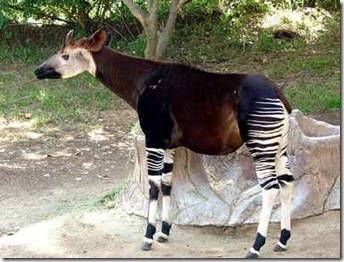
2

Central African tribes and ancient Egyptians described and depicted a bizarre creature for centuries, colloquially dubbed the “African unicorn” by Europeans. It is known locally by such names as the Atti, or the O’api, resembling a cross between a zebra, a donkey and a giraffe. Despite descriptions from explorers and even skins, Western science rejected the existence of such a creature, viewing it as nothing more than a fantastical chimera of real animals. Determined expeditions uncovered nothing, and it would seem the “African unicorn” was just as mythical as its namesake.

This changed in 1901 when Sir Harry Johnston, the British governor of Uganda, obtained pieces of striped skin and even a skull of the legendary beast. Through this evidence and the eventual capture of a live specimen, the animal now known as the okapi (okapia johnstoni) was recognized by mainstream science. The okapi is no less unusual today: it is the only living relative of the giraffe, sharing a similar body structure and its characteristic long blue tongue. However, the markings on its back legs resemble that of a zebra’s stripes. Okapis are solitary creatures that remain captivating to scientists; although not endangered, there is still much to learn about their habits and lifestyle.

The okapi was the symbol of the now defunct International Society of Cryptozoology, and remains a persisting icon of Cryptozoology to this day.


#1 - Giant Squid
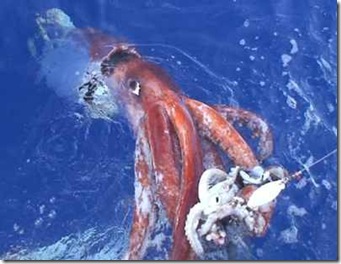
1

Tales of enormous squids have circulated throughout the world since ancient times. Aristotle and Pliny the Elder both described such monsters; legends such as the Lusca (Caribbean), Scylla (Ancient Greece), and the sea monk (Medieval Europe) all describe a bizarre, often dangerous nautical creature. Perhaps the most famous legendary squid is the Norse Kraken, a monstrous, tentacled beast as large as an island that devoured ships whole. Prior to the 1870s, scientific opinion held such creatures as nothing more than ridiculous myths, on par with mermaids or sea serpents.

Despite this, investigations into the existence of the legendary Kraken took place as early as the 1840s. Danish zoologist Johan Japetus Streensup methodically researched and catalogued giant squid sightings and strandings, eventually examining a beached corpse and designating the beast’s scientific name: Architeuthis. Even so, fellow scientists remained skeptical and continued to dismiss accounts.

In the 1870s, the skepticism stopped as several carcasses were beached in Labrador and Newfoundland. Tentacles and complete corpses revealed to the scientific world that the giant squid was indeed real. Today, this creature remains just as mysterious and rare. Typically living at great depths, giant squid sightings are uncommon and often undocumented. For a century, scientists dutifully attempted to observe it in its natural habitat, but failed. Only in 2004 were a group of Japanese scientists able to capture a live giant squid on camera, taking 500 automatic photographs before the creature swam back into the blackness.

Many questions remain concerning the giant squid. Very little is known about its habits and lifestyle, and it is still unknown how large a giant squid can grow. The largest specimens are between 30 and 40 feet long, weighing over 100 pounds. However, its close relative, the Colossal Squid, may grow to much greater sizes, as evidenced by the size of sucker marks on sperm whales. To this day, the giant squid remains a legendary example of how fantastic animals on earth can be.


Bonus

Giant Panda

b

The existence of the giant panda has never been disputed by the scientific community; therefore, it has never been a true cryptid. However, its story offers a valuable lesson to believers and skeptics alike on the merits of cryptozoological research. The giant panda became known to Western science in 1869, when a dead specimen was presented to French naturalist Perè Armand David. In the following years, museums eagerly sent off expeditions to obtain pandas for their exhibits.

However, as anthropologist George Agogino writes, “From 1869 until 1929, a period of sixty years, a dozen well-staffed and well-equipped professional zoological collecting teams unsuccessfully sought an animal the size of a small bear in a restricted area . . . The giant panda lives in the same general area and at the same general elevation as the Yeti, yet this animal has remained hidden for over sixty years.” In 1929, Theodore and Kermit Roosevelt finally killed a giant panda after six decades of elusion and fruitless searching. This historical episode of zoology should send a strong message that nature still has many mysteries to yield, and that our efforts to uncover them can be a daunting, but worthwhile, task.

read more...

Thursday, June 24, 2010

15 More Amazing Animal Facts


1

Facts 1 – 5

Amazing-Animal-Facts_1

1. The tuatara (pictured above) is a lizard-like creature endemic to New Zealand, and it is thought to have existed for at least 200 million years (if you believe in evolution, or 6,000 years if you believe in special creation). The most fascinating aspect of tuataras is their third eye – complete with lens, cornea, rods and nerve tissue connecting it to their brain. This suggests that the eye was a fully functioning eye in times gone by. By six months of age the eye is covered by scales. Pictured above is a baby tuatara. Tuataras are the only remaining species of the sphenodontia genus.

2. Another fascinating fact about ants is that some species send their queen into neighboring nests, where she will bite the head off the resident queen and begin laying her own eggs to take over.

3. On average, sharks kill 10 humans every year. But here is the thing: approximately 100 people die each year when they are stepped on by cows. Remember that next time you are in a field of cattle.

4. Woodpeckers slam their heads into wood at a rate of 20 pecks per second. What protects them from injury is a spongy area that sits behind their beaks and acts as a shock absorber.

5. In the seventeenth century, when anti-Catholicism and anti-papacy was rife throughout the puritan world, puritans would stuff wicker effigies of the Pope with live cats and then set it on fire – taking much glee in the screaming anguish of the poor cats.


2

Facts 6 – 10

Amazing-Animal-Facts_2

6. Unlike most animals, the word for butterfly in European languages do not resemble each other. In German it is schmetterling, in French it is papillon, in Spanish it is mariposa, in Italian it is farfalla, in Dutch it is vlinder, and in portuguese it is borboleta.

7. To vomit, some frogs spew out their entire stomach, rinse it off with their right hand, and then push it back in.

8. The hoatzin (pronounced watseen) bird is a vegetarian which, due to its strict vegetable diet, has stomachs similar to a cows to help it digest. The need for large amounts of food makes these birds very heavy, and consequently bad fliers. The rather beautiful bird is pictured above.

9. Manatees have two teets beneath their forelimbs, which is very likely to be the cause of the many tales of mermaids heard around the world in the days of great sea voyages.

10. Here is one for all the animal rights activists. The giant tortoise was often killed for its delicious oil, which was considered by the Dutch the only way to make the flesh of the now extinct Dodo bird palatable. The flesh of the giant turtle is sufficient to feed several men and virtually every part of it is a taste sensation (including the bone marrow and eggs).

3

Facts 11 – 15

Amazing-Animal-Facts_3

11. Tappen is the name given to a plug made of leaves, resin and fat which bears prepare and insert into their rectum prior to their three months winter dormition. This is to stop insects from intruding and laying their eggs.

12. An ant chamber can be up to 10 feet deep. Each chamber within the vast network is designed for a different task. The bottom chamber is for eggs, while others are for larvae, the queen, new queens and food storage.

13. Bats manage to hang upside down with ease because their claws lock on to the branch or object from which they hang. When a bat dies like this, it stays in place with its toes locked.

14. The double headed Eagle symbol of the byzantine empire has a special meaning. One head symbolizes old Imperial Rome, and the other symbolizes Constantinople, the capital of the Byzantine empire, and colloquially known as the New Rome.

15. The giant weta is a New Zealand insect which can grow a body (excluding legs) to the size of a mouse. It is also, on average, heavier than a sparrow. It is rather a horrifying looking creature, but unlike its also quite large relatives which are found all over New Zealand, the giant weta is confined to small islands. The picture above shows an adult human holding a weta, which gives a good indication of its size. Wetas are harmless and only bite when in danger.

read more...

Thursday, May 27, 2010

10 Recycled Critter Collections

Human beings have relied on the innate warmth and coziness of animal skins for ages, and back in the day with sub-zero temperatures swirling about and the threat of snarling, chronically hungry prehistoric animals at every turn, it made sense to make the most of what remained following a heart-throbbing hunt. Despite the eventual creation of a highly profitable industry built around raising creatures for the sole purpose of harvesting their lush coats, the practice is in our current day and age increasingly considered not only inhumane but also entirely unacceptable now that we’ve developed perfectly viable vegan alternatives. Those who are eco-sympathetic may feel that it is wrong to kill an animal and profit from the sale of its skin, but what about recycling perfectly usable critter body parts when random creatures have met their untimely demise underneath cars, as the result of ill-placed power lines or following a mishap with an immaculately clean office building window? As you will see below, there are more than a few fashion designers and their creative (or morbidly?!?) inspired compadres who pursue the darker side of animal recycling in an effort to craft left-of-center fashion statements that purportedly celebrate the lives of those whose candles have burned out well before their time.


Iris Schieferstein

IRIS-SCHIEFERSTEIN-FINAL

It’s one thing to strut your stuff while wearing the skin of a sacrificed alligator or cow, but once you dare to literally hoof it while sporting recognizable body parts or dead-on, fully intact critters…wellllll, let’s just say that that’s where many fashionistas would easily draw the line. German artist Iris Schieferstein has certainly gone where no other creative minded animal recycler has gone before by fashioning what-the-huh? footwear out of hedgehog bodies, once soaring white doves and now dead-as-a-doornail horsie feet. Certainly striking, these inarguably practical fashion staples nonetheless provoke one to declare a piercingly audible, “Neighhhhh!!!!”


Reid Peppard’s RP/ENCORE

REID-PEPPARD

Unlike many of her taxidermy contemporaries who fail to clearly identify precisely how they source the subject of their works, Reid Peppard has long been very transparent about using city casualties that have been found rather than hunted. While it’s not surprising that many find her distinctive brand of fashion rather repulsive, the self-confessed vegetarian sees nothing wrong with transforming what would have normally gone to waste into beautiful personal adornments that might potentially have the power to change the general perception of city-dwelling vermin and garden variety rodents. Interestingly, Peppard has commented that many of her naysayers will “wear leather without thinking…eat meat, drive cars that pollute the atmosphere (and) then turn around and say that my taking waste and preserving it is somehow wrong.” Good point. Now who’s this close to buying her pristine white rat carcass coin purse? Hello? Any takers? Rat purse anyone?


April Hale

APRIL-HALE

For those who experience a serious case of the heebee-jeebies when it comes to the mere mention of the words rat purse, April Hale’s line of roadkill jewelry (with no heads attached) may be just what the doctor ordered. Why must we continue farming conventional forms of fur, anyway? Imagine going cold turkey on the fur industry altogether and instead repurposing the hides of anything that perishes due to natural or city-livin’ causes? There’s certainly a seemingly endless supply…   Hale — who also happens to eschew meat — was inspired to pursue this unconventional fashion niche following an unfortunate incident in which a squirrel pulled a deer-in-headlights moment by freeze-framing underneath the tire of her car. She now pays her bills by transforming all manner of flattened critters (house pets excluded) into quirky adornments that celebrate the simple beauty of what we take for granted.


James Faulkner

JAMES-FAULKNER

Brits tend to dabble in the quirky side of life (or death as the case may be),  but in their defense, they are also far more likely to exercise sustainable behaviors due to a deep-seated eco-awareness that permeates their culture. Scotland-born James Faulkner initially applied his green inclinations on a grand scale by transforming a dearly departed magpie located on the side of the road into a show-stopping headpiece for a friend’s wedding. With ooohs, aaahs and many follow-up orders under his belt, Faulkner soon found himself smack dab in the middle of a dandy little business that allowed him to exercise his artistic inclinations while also honoring his belief in treading lightly on the earth. Stating that he hopes to “maintain the beauty of these creatures” with his hand-crafted millinery, he is opposed to “farming for fashion, which is why (he) sources all of (his) materials as much as possible.”


Lady Lavona

LADY-LAVONA

Fancy a gnarly-looking bird claw, set of critter choppers or a brawny black beak dangling from your neck? Then Lady Lavona is your gal, conjuring up all sorts of beastly anthropomorphic fashion adornments that pay homage to the macabre Victorian-era penchant for recycling bits and pieces of animals bagged in hunting excursions. While she sources some of her inventory straight from 16th – 19th century stockpiles — including vintage animal hoof necklaces and full spreads of miniature fangs — a great deal of what she sells is self-designed, such as her wildly popular crows feet amulets accented with an artful tangle of earth-toned semi-precious jewels. One thing that Lady Lavona wants prospective buyers to know about her collection is that her animal trinkets are legitimately recycled, unlike those of her competitors that “are bred in captivity for the sole purpose of being sold to human consumers…labs, pet stores, etc.” and yet billed as never being killed for the sole purpose of becoming one of their end products.


Wim Delvoye

WIM-DELVOYE

Judging from current industry statistics, the pork biz is doing oinkingly well — by golly, it’s the top animal-based protein source consumed in America! While the other white meat is deeply entrenched in our food chain, we rarely stop to think about how piggy parts are typically recycled. Aside from the bazillion rawhide ears that man’s best canine friends typically snack on in the span of one year or the potted pig meat wonder that we guiltily fry up in a pan (most commonly known as Spam) — porcine skin is also used in the fashion world…but how about pre-tattooed pig skin accessories? Wackadoodle Belgium artist Wim Delvoye has made this seemingly inhumane concept a very real reality on his Beijing-operated ‘art farm’ (the location specifically chosen due to the lack of animal rights concerns). It is there that he and his staff of master tattoo artists brand live (but fortunately sedated) pigs slowly but surely with all sorts of varied images and then allow them to grow to slaughter weight, tan their skins and then either sell the resulting canvases as art, use them as the foundation for custom fashion accessories or taxidermy entire creatures to sell to well-heeled consumers who think nothing of staring eye-to-eye at their specially ordered critter casualties.


Maximilian’s Pet Shop

PETS-AS-TROPHIES

Katie Higgs and Ella Kigour — the masterminds behind Maximilian’s Pet Shop — know just how ga-ga we are for our pets, so in a nod to the celebrity trend of dragging petite creatures along with us on mundane shopping excursions, the design team has conceived of a way for mere mortal no-names to do the same while employing a dash of conversation-starting-style. Sure, they have a few designs — such as their burrow friendly rodent accessible sweaters/scarves and bird cage purses — that enable still alive and kicking creatures to see the world with their pet guardians in tow. What is particularly creepy, however, is their Taxidermy Kitty Carrier which, while technically not a fashion accessory per se, still deserves to a place in the annals of extreme eco-fashion since those who are desperately smitten with their departed kittens might feel inclined to show the whole world just how sweet their whiskered face once was (and still is thanks to the modern wonder of well-executed taxidermy). Anyone squirming yet?


Loved To Death

LOVED-TO-DEATH

Oh goodness gracious…squirrel paw and bird head jewels?!?! Oh sure, why not! The folks at Loved To Death — who by the way have been very publicly accused of misleading their buyers by claiming that no animals were intentionally killed to create their pieces — made headlines with their instantly heart-sinking Polly-no-longer-want-a-cracker pendant, and with good reason. The instantly recognizable parrot, often found in the homes of many-an-animal-lover, never did anyone wrong aside from randomly chomping down on pokey, chronically inquisitive fingers for no particular reason. Not that such an unwelcome action deserves being beheaded and mounted on a silver-plated shield. Sigh. Parrots of the world…be forewarned.


Julia DeVille’s Disce Mori Collection

DISCE-MORI

‘Learn to Die’ doesn’t sound like a very nice name for a company, and yet Julia DeVille’s appropriately Latin-named taxidermy-based company isn’t billing itself as anything other than being a haven (or fashionista pedestal, if you will) for the preserved bodies and random parts of creatures that have passed over to the other side.  The natural born Kiwi who now calls Australia her home intentionally utilizes “symbols of mortality” that have perished au naturel in an effort to inspire wearers to “contemplate their own mortal existence and, in turn, appreciate the significance of life.” The result is a collection of crumpled, bejeweled and tah-dahhh fashion statements that are oddly compelling yet flat-out freaky-deaky…great for the fashion-forward goth enthusiast or been-there-done-that rock star who really wants to get tongues flapping.


Custom Creature Taxidermy

CUSTOM-CREATURE-TAXIDERMY

Embracing a ‘waste not, want not’ mentality, wildlife rescue/rehabilitator/conservationist Sarina Brewer — who feels that animals are just as beautiful in death as they were while alive — proudly recycles every single animal body or component that passes through her hands. Typically reincarnating the bodies of creatures with varying circumstances (think roadkill, animals that are deemed as pests, pet trade casualties and discarded cattle), the Science Museum of Minnesota volunteer is an odd breed in that she is not only a self-confessed science nerd but also an artist who creates oil-based paintings, sculptural works and wearable fashion accoutrements. If her $45 grouse foot necklace doesn’t grab you, then her $55 coiled rat tail necklace, preserved raccoon heart or mummified kitten paw earrings surely will. The good news for sustainably-minded consumers is that you can take your eco-purchase one step further by repurposing many Custom Creature Taxidermy jewelry pieces as makeshift back scratchers — hmmm, on second thought, perhaps that extracurricular application might kick your itch into overdrive!

read more...

Wednesday, March 24, 2010

10 Amazing Animal Migrations

Animal migrations are some of the most moving (literally) phenomena Mother Nature has to offer, and these 10 amazing examples redefine the word “superlative” on a number of levels. Fastest, largest, longest and even stupidest – when animals migrate, they often do it in a BIG way.


#1 - Monarch Butterflies: It’s a Wing Thing

image

image

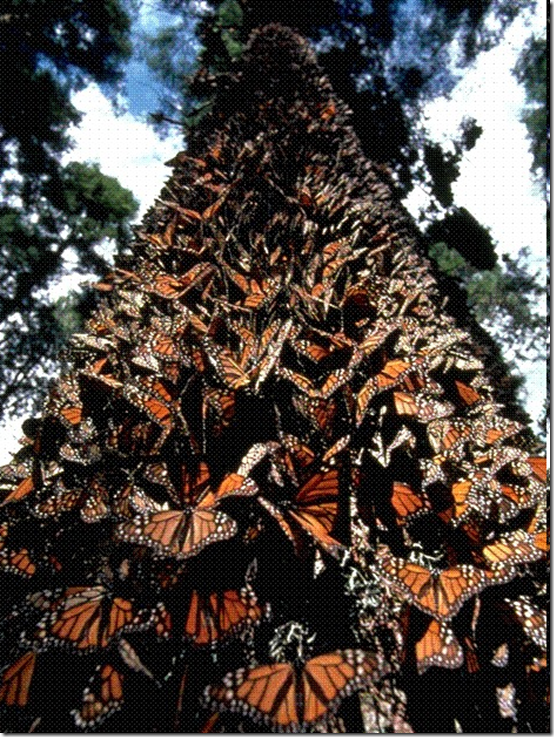
The mass migration of Monarch Butterflies is arguably the longest – both in distance and time – of any insect species. Conducted over a number of seasons and generations, perhaps the most amazing thing about the Monarch migration is that their overwintering refuge in central Mexico’s Oyamel Fir forests wasn’t discovered until 1975!

image

image

Will the majestic Monarchs be able to continue their epic migrations in the coming years? They face a range of difficulties, some but not all the result of human activity. Illegal logging, land clearing and simple population pressure will likely increase but besides these, regular El Nino events such as the one in 2009-2010 soak their winter refuges with rain, sleet and snow. Can the Monarchs persevere? Only time will tell.


#2 - The Great Wildebeest Migration

image


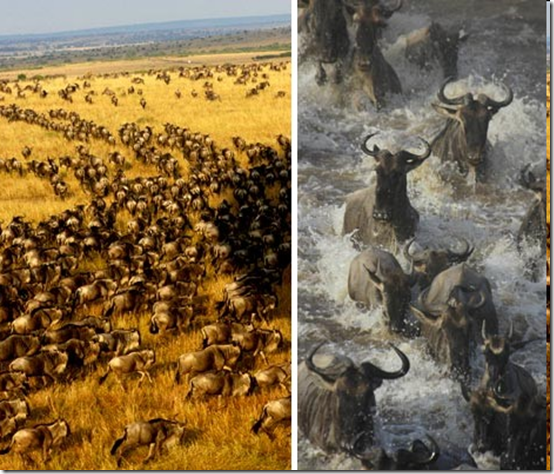
he annual migration of over 1 million African Wildebeest and Zebras has been well documented by filmmakers and wildlife documentary producers for decades. Every February in the Ngorongoro area of Tanzania’s southern Serengeti plains, the “Great Wildebeest Migration” begins.

image


The exact starting date depends on the progress of the calving season during which around 500,000 calves are born, but by early March up to a half million zebra, nearly 2 million wildebeest and around 100,000 other grazing animals are on the move, headed towards the fertile plains and woodlands of the western Serengeti across the border in Kenya’s Masai Mara region.

image


The final obstacle for the Serengeti’s thundering herd is also the most challenging: the Mara river. Animals already weakened by weeks of travel through dry and barren savannah offering little food or water must now run the gamut of flood-swollen, rushing waters and swarms of hungry crocodiles. Around 250,000 wildebeest will die during the course of their 1,800-mile migration but the herds have proved to be remarkably resilient.


#3 - Worst Case of Crabs EVAR

image

image

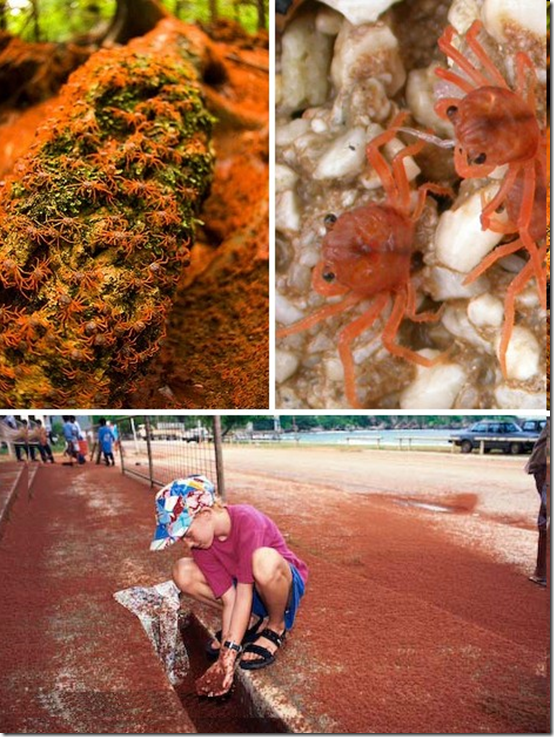
Christmas Island, an isolated Australian territory located in the Indian Ocean, is home to about 1,400 people.. and up to 120 million Red Crabs. Luckily for the inhabitants the crabs aren’t carnivorous (just occasionally cannibalistic), but their sheer volume results in a unique spectacle played out each year when tens of millions of the burrowing crabs migrate to the sea to lay their eggs.

image

That’s only half the story – once the baby crabs complete their marine larval phase, they clamber back onto the shore and migrate into the island’s central rainforest. Although the baby crabs are very small, they make up for their size with numbers: each adult female releases about 120,000 fertilized eggs. You can do the math, my calculator can’t display that many zeros! The “red tide” of young crabs that sweeps across beaches, through towns and across gold course has to be seen to be believed… so here it is!

#4 - Arctic Terns: Long Distance Voyagers

image

It’s not only human jet-setters who see two summers every year; the Arctic Tern has been doing it for countless centuries. This smallish seabird holds the record for the longest migration route of any known creature.

image

The Arctic Tern’s travels take it from breeding grounds in northern Canada down to the southern ocean off the Antarctic continent, and back again. Considering the terns’ indirect course used to take advantage of prevailing winds, the average bird will make a 45,000 mile (over 70,000 km) round trip each year.

image

Arctic Terns are long-lived birds that can live upwards of 30 years. It’s estimated that in the course of a lifetime, these long distance champions will fly over 1.5 million miles (2.4 million km)… enough to take it to the Moon and back 5 or 6 times!

#5 - Caribou: Have You Herd?

image

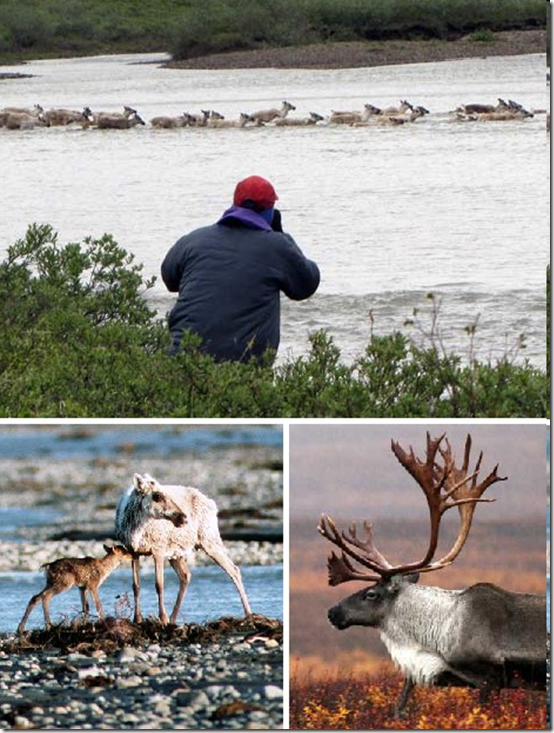
One of the longest known and best documented large-scale animal migrations is that of the northern Caribou. Not all caribou migrate and those that do, don’t always follow the same route each time. Much depends on the vagaries of the weather – and based on that, the availability of food.

image

The three largest herds of caribou are the George River herd in northern Quebec province in Canada, the the Western Arctic herd based in northwest Alaska, and the Taimyr Peninsula herd found across the Bering Strait in Siberia. Large caribou herds migrate from about 100 to over 500 miles each year.

image

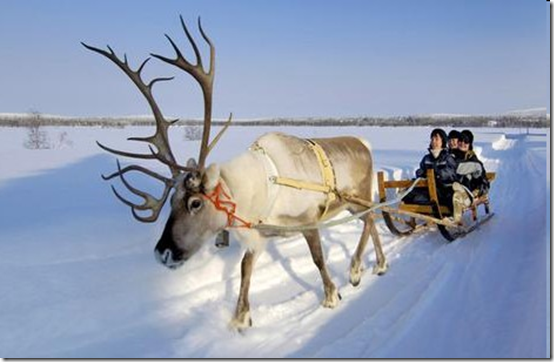
A few fun facts about Caribou… did you know that herds once roamed the Great Lakes states and Maine? Though Caribou and Reindeer are of the same species, the latter term is used to refer to domesticated caribou kept most commonly by the Sami people of northern Scandinavia’s Lapland region.

#6 - March of the Emperor Penguins

image


Emperor Penguins aren’t the only species of this iconic antarctic bird that migrate but they are perhaps the most famous, thanks in part to the beautifully filmed chronicle entitled March of the Penguins. These magnificent creatures are highly adapted to the incredibly harsh conditions they live in; even so, breeding during the bone-chilling, pitch black Antarctic winter is a monumental achievement in and of itself.

image

Though the migration of Emperor Penguins to and from their inland nesting grounds may seem short compared to that of other animals in more temperate climes, the journey is fraught with hardships and the margin for error is exceedingly thin.

image

So well adapted are Emperor Penguins to the Antarctic’s hostile conditions, the species is not considered to be threatened. Currently around 30 colonies exist and their population fluctuates due to weather conditions and the varying distance from their nesting grounds (which remain in the same place) and the constantly shifting edge of the sea ice.

#7 - The Return of the Swallows to San Juan Capistrano

image

A miraculous migration, is what some call the annual return of the Swallows to Capistrano. It’s an event that has taken on the luster of romance and sentimentality as each year on March 19th – St. Joseph’s Day – the swallows traditionally make their return to the Mission San Juan Capistano in the town of San Juan Capistrano, California, near San Diego.

image

The Mission was founded by Franciscan friars on on All Saints Day (November 1st) of 1776 and its arched belfry soon attracted the local swallows who used its shelter to protect their nests. An earthquake in 1812 exposed the rafters of The Great Stone Church but the Cliff Swallows were not dissuaded from nesting there. Where do the swallows return from, you might ask? Their migration is actually somewhat miraculous as they fly 6,000 miles (10,000 km) south to their wintering range in Goya, Argentina, and then must make the long and arduous return trip.

#8 - Gray Whales: It’s No Fluke

image

Gray Whales are a popular sightseeing attraction in and around Baja California but few are aware of the creatures’ long distance migration. In fact, Gray Whales have the longest migration route of any mammal, land or sea.

image

Each year, these medium-sized, mild-mannered cetaceans make a round trip of 10,000-12,000 miles (around 18,000 km) between their winter calving lagoons off southern California and Mexico and their preferred summer feeding grounds around Alaska’s Aleutian Islands and the Bering Strait

image


Besides providing enjoyment for whale-watchers up and down the California coast, Gray Whales have another claim to fame: the 1988 effort to rescue three whales who overstayed in the arctic and became trapped in sea ice off Point Barrow. The drama was closely followed on American television and the rescue (which cost $5.5 million) entailed the use of Coast Guard helicopters dropping 5-ton concrete pillars to break up the ice and a Soviet icebreaker that helped carve a path from the whales’ shrinking pool of unfrozen water to the open sea. Cold War indeed!

#9 - Legend of the Lemmings

image

Lemmings are a species of rodent found in northern Scandinavia, Siberia and Canada’s arctic regions. Being a herbivore in the tundra is a risky proposition and lemming populations rise and fall – sometimes precipitously – in good times and bad. Normally solitary creatures, lemmings may go on mass migrations when biological urges dictate the need to find new feeding grounds. At times, rivers and cliffs may block their paths – be assured, though, that lemmings who fall or drown in the process of migration do not do so willingly.

 image

A widely believed myth about lemmings is that they occasionally erupt across the arctic landscape on suicidal “death marches”, sacrificing themselves for the betterment of the species when food supplies run short. Not so – the myth was perpetuated by a 1958 Disney nature documentary called “White Wilderness”. It was later revealed that the film was made with the extensive use of staged footage, such as lemmings being filmed on a snow-covered turntable or launched into the air by (human) hand. Here’s a short video compilation from the film that features ONLY the fake footage:


#10 - Passenger Pigeons, RIP

image 

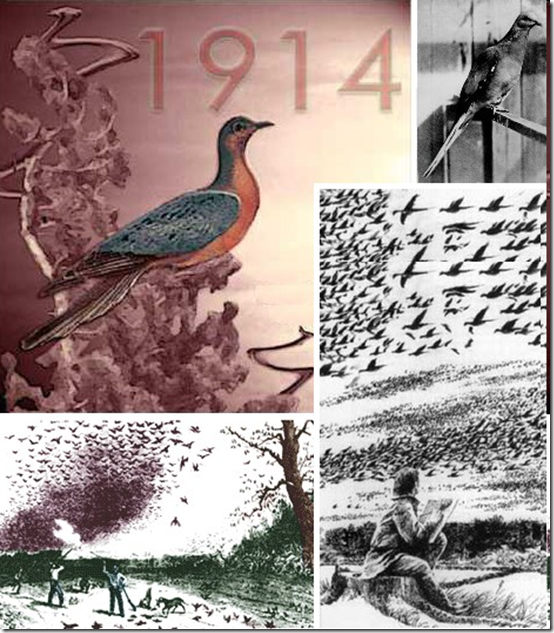
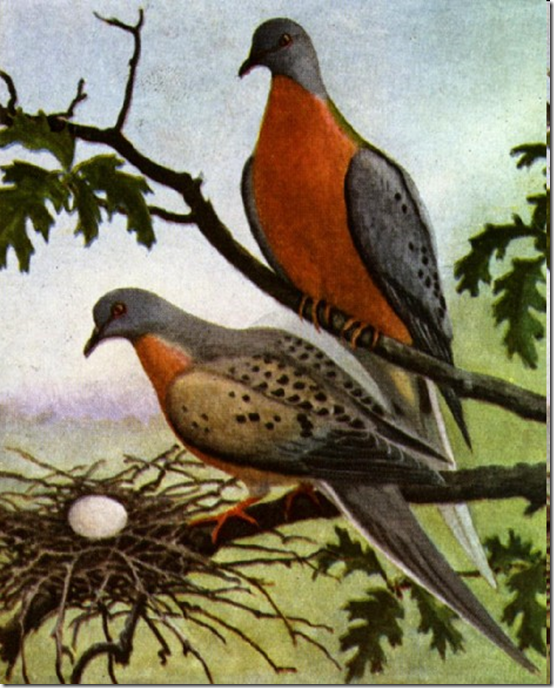
One of the greatest migratory species in history is… history. Passenger Pigeons by the hundreds of millions used to darken American skies for hours, even days at a time as they migrated to and from their forested nesting grounds. It was said that the ground beneath their roosts was covered with up to 2 inches of droppings and the branches of mature trees would snap under the weight of dozens of nests. At its greatest, the total number of Passenger Pigeons was estimated to be about 6 billion birds. So, what happened?

image


WE happened… the perfect predator meeting the perfect prey. Passenger Pigeons were low fliers whose nests were easily accessible. They were also, from all accounts, quite tasty. By 1880 the massive migrating flocks were no more and the last wild bird was shot in 1900. The last of the species, a captive bird named “Martha”, died in 1914.

 image

We know today that human hunters were not the sole cause of the Passenger Pigeon’s demise. Habitat loss was a major factor – as the sprawling forests of the eastern U.S. were cut down, the pigeons had nowhere to roost. In addition, the birds could not adapt to the emerging paradigm of The Earth Plus Humans, unlike their Rock Dove and Mourning Dove cousins. It was a “perfect storm”… from which the Passenger Pigeon was unable to emerge.


The sad tale of the Passenger Pigeon echoes into the modern age as a warning of what might be. Safety in numbers is a relative term – when the numbers add up wrong, your numbers will decrease. There was no such thing as “environmental awareness” a century ago and it’s assumed humanity has learned a lot about peaceful coexistence with the rest of the animal kingdom. The fate of the world’s remaining migratory species will prove if we really have learned, or are doomed to repeat the same mistakes.

read more...