Showing posts with label Science. Show all posts

Monday, August 30, 2010

8 Ways to Ensure Human Survival


Recently, renowned physicist Stephen Hawking announced that if humans didn’t want to face extinction, our only option is to abandon planet Earth. In addition to the threats most species face, we humans also have the capability to destroy ourselves and/or our planet with thermonuclear weapons. Nuclear devastation tops a long list of ways for us to go out, including asteroid impacts, solar storms, disease outbreaks, etc. Here’s a fun fact: Over 99% of all species that have ever existed on our planet have gone extinct. Still, assuming Earth someday becomes inhospitable due to some catastrophe, here are 8 ways for us to avoid extinction.


#8 - Fix the Planet

8

In the event of widespread devastation such as a nuclear holocaust, asteroid impact or some other large-scale environmental disaster, one way humans could survive would be to simply rebuild. For shelter, humans would most likely be forced to settle in places either untouched or the least damaged by the disaster. Securing food and water may not prove as difficult as expected. There are many techniques for purifying, distilling, and ensuring water is safe to use. The short-term solution to food would be to forage. Nuclear fallout can be washed off sealed food, fruits and vegetables, etc. with minimal risk of danger. Long term solutions could include reintroducing destroyed species into nature. The Svalbard Global Seed Vault in Norway is home to over 250 million seeds, with a total capacity of more than 2 billion. Underneath a cooling layer of permafrost, it is located inside a mountain near the North Pole, 400 feet above sea level and far away from tectonic plates. If the food chain were ever disrupted, genebanks like Svalbard would be crucial to our survival.


#7 - Forced Evolution

7

If the food chain were disrupted by plague, or a deadly pandemic were spreading among humans, an option to fight back might be genetic manipulation. Scientists have already figured out how to force evolution of a virus to manipulate it’s behavior and reproduction, and they also know how to manipulate and replace genes in humans. Certain harmless viruses can be forcibly evolved to bypass our immune systems, making them perfect delivery systems for drugs that target specific cells. Genetic engineering and gene therapy in humans could potentially prevent future generations from contracting diseases and also to help the living by swapping out bad genes for good ones – a technique called somatic cell gene therapy.


#6 - Live Underground

6

In the early 1930s, plans were drawn up for a 35-story “depth scraper,” to be built underground in an enormous excavation. This was proposed as an engineering solution to survive earthquakes in Japan. The idea was never realized, but extended human habitation underground has long been a popular idea. If the surface of the earth was somehow rendered inhospitable to humans, through nuclear or solar radiation, a nuclear winter or impact winter, etc., living underground may be a solution to survival. The obvious problems are lack of sunlight, ventilation and food and water, but, as we’ve recently heard from the trapped miners in Chile, the psychological issues associated with being stuck underground are immense, and maintaining mental health is equally as important as maintaining physical health. Farming underground utilizing skylights may be possible, but recycling and efficient energy use would be paramount. Ultimately, living underground would most likely be a temporary fix until a return to the surface (or one of the last four list items) is possible.


#5 - Colonize the Ocean

5

One solution to the problem of overpopulation and mass over consumption of resources would be for humans to colonize the ocean. A technology called Ocean thermal energy conversion (OTEC) uses the temperature differences between shallow and deep water to run an engine, which would provide an easily obtained renewable energy source. Solar and wave power could also be easily obtained at sea. OTEC technology can also be used to provide fresh water which could support large scale hydroponic farming. Extended human habitation would require underwater, partially submerged, or floating cities. Megastructures like the Shimizu Mega-City Pyramid have been suggested, but due to the immense weight issues involved, it would require technology that is currently unavailable.


#4 - Space Stations

4

If our planet is somehow damaged beyond repair or becomes too saturated with people, we may have no choice but to leave. The first step away from Earth would most likely be large space habitats. Space habitats have been a popular recurring theme in science fiction, with many of them resembling the Stanford Torus idea. This is comprised of an enormous rotating donut shaped ring (torus) which would simulate gravity on the interior by using centrifugal force. The interior of the torus would be large enough to simulate a natural environment, resembling a long valley that curved up at the ends until meeting overhead and forming a complete circle. Energy would primarily come from solar power, and building resources could be mined from asteroids or nearby moons and planets. In addition to providing habitation away from Earth, having multiple and separate space habitats would ensure the survival of our species even if one population is destroyed.


#3 - Satellite Outposts

3

Another option when leaving our planet would be to colonize satellites like moons or asteroids. Satellite outposts would most likely be specific to the resources available on the satellite. Almost all known elements can be found in stable forms on asteroids or comets. Satellites that are rich in specific elements or minerals could be mined for their materials and easily transported due to the lack of strong gravity. Large amounts of frozen water and carbon-bearing compounds have been detected on moons orbiting Saturn, Uranus and Neptune. One of Jupiter’s moons, Ganymede, even has a magnetosphere which would reduce solar radiation at the surface. Outposts on satellites, while being crucial for getting building materials and/or fuel, would likely not be permanent human settlements, as there would be no reason to remain once the resources have been consumed.


#2 - Planet Outposts

2

Once humans are in space, outposts and colonies on other planets would be the next step in expanding away from Earth. These settlements would be of a more permanent nature because of the more abundant resources available for extraction on planets, and because of the large amounts of energy needed to leave the atmosphere once on the surface. Habitats on planets like Mars and Venus would have to be underground or enclosed, due to the inhospitable conditions on the planet. Because of the extreme temperature and air pressure differences, methods to support life would be similar to that of underground or space habitats. There have also been less practical ideas on how to populate the larger gas giant planets. One method even involves suspending floating cities from giant balloons in the upper atmospheres.


#1 - Planet Terraforming

1

The last, and by far the most ambitious item on the list, is to deliberately make an inhospitable planet suitable for humans to live normally as they do on Earth. This process, called terraforming, is well beyond our current realm of technology and capability, but could possibly be a viable option in the distant future. The first step would be to release greenhouse gases into the atmosphere of the planet, trapping the Sun’s heat and raising surface temperatures. In the case of terraforming Mars, raising surface temperatures would be needed in order to vaporize the polar ice caps. This would, in turn, release carbon dioxide into the atmosphere, further warming the planet. Ice would melt, raising atmospheric pressure and providing the much-needed water. The final (and by far the most time consuming) stage would be to plant trees that use carbon dioxide and produce oxygen, making the air breathable.

read more...

Friday, August 27, 2010

8 Unbelievable iPod Stories


#1 - The girl who survived a lightning strike after the wire of her iPod diverted 300,000 volts

1

A teenage girl survived a terrifying lightning strike after she was saved by the wire of her iPod.
Schoolgirl Sophie Frost and her boyfriend Mason Billington, both 14, stopped to shelter under a tree when a storm struck as they were walking near their homes. Doctors believe Sophie survived the 300,000-volt surge only because it travelled through the gadget's wire, diverting it away from her vital organs. The teenager was taken to hospital and is recovering from burns to her chest and legs while Mason suffered damage to his eyes. Sophie will be thankful she was wearing her iPod, which she had been given four days earlier as a gift from her grandmother. Sophie and Mason were knocked unconscious by the lightning bolt while holding hands and taking shelter in a field. Mason came round and carried Sophie, who was scorched and unconscious, to a nearby road where he flagged down a female motorist who took the couple to Southend hospital. Sophie suffered burns to her body and legs, some temporary damage to her eyes and a perforated eardrum.


#2 - The soldier who was saved from an AK-47 attack thanks to his iPod

2

Kevin Garrad (3rd Infantry Division) was on a street patrol in Iraq and as he rounded the corner of a building an armed (AK-47) insurgent came from the other side. The two of them were within just a few feet of each other when they opened fire. The insurgent was killed and Kevin was hit in the left chest where his IPod was in his jacket pocket. It slowed the bullet down enough that it did not completely penetrate his body armor. The iPod in question was an older and thicker 20GB model, that had been previously manufactured and distributed by HP. The thickness of this model most likely served a big part in slowing down the bullet. Fortunately, Kevin suffered no wound.
Note: according to some sources the iPod did not actually save the soldier's life - it was in fact the vest he was wearing.


#3 - The teacher who got his neck broken by two students after he confiscated their iPod

3

Two students accused of attacking a teacher in a hallway of Germantown High School are now behind bars. The attack happened after 60-year-old Frank Burd confiscated an iPod from one of the students who was using it in class. The 14-year-old returned later with an 11th grader.
The teens allegedly pushed Burd, who struck his head on a locker. Schools CEO Paul Vallas said Burd broke his neck in two places. He was taken to Einstein Medical Center, but showed no sign of paralysis. The confrontation was caught on videotape. School officials were able to use the tape to immediately identify the students. 17-year-old Donte Boykin was taken to Northwest Detectives in handcuffs shortly after arresting the 14-year-old. Burd, a popular math and photography teacher, was sent to Einstein Medical Center for recovery.


#4 - The pair who was arrested for trying to trade iPod Touch and Marijuana for iPad on Craigslist

4

Police arrested two men in Arizona for attempting to trade a third generation iPod touch and about seven grams worth of marijuana for a 32G iPad via an ad on Craigslist. After receiving a tip about the ad, which included photos of both the iPod touch and marijuana, police officers sent an e-mail purporting to be interested in the exchange. When the police met up under the pretense of completing the trade, 20-year-old Jacob Walker and Jacob Veldare were instead arrested when Walker offered up the marijuana. Both now face charges for possession and the attempted sale of an illegal substance.Not only were the two unwise enough to post pictures of marijuana on Craiglist, but they were also gullible enough to believe that anyone would trade a 32G iPad, which costs $599, for a $299 32G iPod touch and a quarter ounce of marijuana of dubious quality.


#5 - The sub navigator who caused a £60m ship crash because he got distracted with iPod

5

The navigator of a US nuclear submarine was listening to his iPod when it collided with another ship, causing £60m damage. Crew on board of the attacked sub USS Hartford had also rigged up loudspeakers so they could listen to music on duty. Captain Commander Ryan Brookhart was relieved of his duties after the investigation revealed nearly '30 tactical and watchstander errors' which led to the ‘avoidable accident'. The navigator was also revealed to have been revising for an exam at the time of the collision. Fifteen sailors on board the USS Hartford were injured when it rammed into the transport ship USS New Orleans in the Strait of Hormuz, a narrow passage in the Persian Gulf in March 2009. The US Navy report slammed the Hartford's ‘ineffective and negligent command leadership' and its ‘informal atmosphere'. The damaged sub will cost £57m in repairs, while the USS New Orleans, which ‘bears no fault' needs £1.5m


#6 - The man who found a one-year-old frozen iPod still alive

6

Andrew Robulack, a resident of Whitehorse, Yukon, found an iPod Classic emerging from a block of ice while he was taking a walk. At first, he mistook it with a piece of canine excrement, a common thing in Whitehorse this time of year, as he gladly informs us. But then he noticed that the unidentified frozen object had a familiar rectangular shape. Obviously, he got the frozen iPod out of the ice in which he thinks it had been laying “since early winter” and took it home to see whether it still worked. Incredibly, after only a few minutes of charging, the player booted up and seemed in full operating order. Of course, it needed some cleaning, but it even displayed the correct date. After the mud was wiped out, the iPod revealed that the only damages were a few scratches and some condensation under the screen; otherwise, it worked just fine.


#7 - The Tokyo subway train that was delayed because of an iPod fire

7

In August 2010, an unidentified, malfunctioning iPod brought a Tokyo subway train to a halt for several minutes during rush hour in western Tokyo's Setagaya Ward, 17 km (10.5 miles) from the capital's centre. Passengers started complaining about a burning smell, forcing the train to come to a halt while officials went searching for the source. A female passenger then came forward to show that her iPod had burst apart after overheating. The train was delayed for 8 minutes while the stench cleared. For the busy train line, which serves over 1 million commuters daily, that's an extremely rare delay -- the average delay for a train is a scant 20 seconds for some Japanese railways. Apple has described the problem as rare, and attributable to a single battery supplier


#8 - The girl who almost got injured after her iPod exploded

8

Ken Stanborough, 47, from Liverpool, had to drop his 11-year-old daughter Ellie's iPod Touch after he started hearing a hissing noise and felt it was getting hotter. After throwing the device out of his back door, within 30 seconds there was a pop, a big puff of smoke and it went 10 ft in the air. According to Mr Stanborough, Apple attempted to silence him and his daughter with a gagging order, offering a refund, only if he agreed to keep it quiet. A number of bloggers have reported cases where iPods have exploded — usually involving older versions of the digital music players.

read more...

Friday, August 6, 2010

10 Unbelievable Technologies that Exist Now


The state of technology in 1999 was pretty impressive, we thought, and it was hard to imagine things getting much better. We were doing pretty well for ourselves and surely wouldn’t see any major technological advancements for decades to come.

Ten years later, the world is a very different place than we never could have imagined, in our wildest of dreams. There has been a surge of revolutionary technologies in the last decade that even Science Fiction couldn’t have predicted. Everything from the way we play, to the way we think, has been challenged due to these advancements. Here are just a few.


#10 - Portable Gaming Devices

10

Just before the turn of the millennium, portable gaming was booming. Most people that had a portable gaming device sported a Gameboy, and the really lucky ones had a Gameboy Color. There was always that one rich kid at Pizza Hut, too, with the Sega Gamegear that people couldn’t stop talking about, and Pokemon was taking the world by storm.

At night, you would fall asleep with images of the Atari Lynx swimming around in your head and hope that one day you could afford one. 10 years later, you’re glad that your parents never sprung for one of them.

Not long after that part of your life, the portable gaming world changed dramatically. With their staunch lead, Nintendo started to be more experimental and it paid off. The Gameboy Advance put quality graphics that were slightly above Super Nintendo, and sound in the palm of your hand, and further still the Nintendo DS (a few years later) managed to squeeze out post-N64 quality gaming with a touch-screen, and opened up a whole new world of gaming possibilities.

What’s more impressive is that, for once, Nintendo had some serious competition in the portable gaming racket. Sony took their powerful juggernaught, the Playstation 2, and compressed it into a comfortable, handheld console that demanded respect. Graphics and sound quality that Sony was notorious for could now be enjoyed, portably, on a beautiful 4.3″ screen.

If only you knew, back in your room 10 years ago, that things were about to change, and that one day you would forget all about the Atari Lynx… until you read about it in a Listverse article.


#9 - Hybrid Cars

9

Electric cars have been on the tongues and minds of consumers for decades, and the conspiracies and facts behind their obvious exclusion in the automotive world have raised a lot of questions and frustrations. Electric cars will greatly reduce man-made pollution, make the roads quieter and safer, and take the icky smell out of the air at Quick-e-marts worldwide. They’re an obvious “next step” in technological evolution.

In 1999, however, during a time when much of the world experienced a great deal of prosperity, the electric car was little more than a pipe dream. We all thought it sounded like a neat idea but were reluctant to accept it as a real possibility in the near future.

Well, we were half right.

Hybrid cars have finally clawed their way into the spotlight. Their part-gasoline-part-electric functionality has brought the whole concept of being “carbon sensitive” into the mainstream. Gasoline cars got the job done, but required too much pollution and too low of gas mileage to be acceptable anymore. Electric cars were silent and gave off virtually no pollution, but had to be recharged every 50-100 miles. The hybrid was the perfect answer.

It’s true that we still have a few years (but possibly fewer than we think) until we see every car on the street be Electric Powered, but for now the number of cars that run at least *partially* on electric power would incite quite a bit of skepticism one decade ago.


#8 - Solid State Data Storage

8

In 1999, if you had an 8 gigabyte (gb) hard drive, you were the cool kid on the block. “What can you possibly fill that whole thing up with?” your friends would ask you.

Computer games you bought at the store fit on a single CD-ROM, and everyone knew that you had to wait for your hard drive to spin up before each level. Those of us who were especially caring of our expensive, magnetic, spindled drums of data would even run Scandisk and Defrag on them (which would take hours, of course). Things were looking up, too, as hard drive experts predicted that in the year 2000, 30gb hard drives could be as cheap as $200.

Now, imagine yourself waking up in the middle of the night because someone outside your window is throwing pebbles on it. When you open your window, you notice that they look exactly like you, only about 10 years older. They tell you not to worry, because in a single decade hard drives will be ridiculously smaller, lack any moving parts, be practically weightless and can withstand far more brutal environments.

Oh, and it’s far cheaper, too. You know that 8gb hard drive you just spent $150 on? You can get one that fits in your coin pocket for $15, down the street.


#7 - Broadband Internet

7

Remember ISDN? Integrated Service Digital Network? Although it’s possible that you do, it’s far more likely that you don’t. It was the closest thing to broadband in 1999.

No, the vast majority of people accessed the internet from a 56k modem. Those who were not at least in the lower-middle class, however, had to dink around a 14.4 modem, or worse: 2400 baud. It’s enough to make one shudder.

Back then, though, the internet was a much simpler place. Text, images and an occasional embedded MIDI were all that was expected of any given website. Animated GIF’s were the future, and Flash showed some serious potential.

These days, however, the internet is a wonderland of bandwidth-sucking marvels. Streaming video and music, BitTorrent and Cloud Storage systems are everyday necessities and require almost as much bandwidth as our hard drives do. If you were to try to watch a 10 minute Youtube video back in 1999, it would take 68 minutes to buffer. These days, if it takes more than 15 seconds, we get our ISP on the line.


#6 - The iPhone

6

Almost anyone can admit that when they first heard of the iPhone, they thought it was a hoax.

Criticize it, love it, boycott it; it’s undeniably one of the most influential changes to the consumer electronics world in the last 10 years. It has revolutionized how we see and use cell phones and has inspired numerous alternatives. These days, devices that have nothing to do with cell phone technology adopt the most popular features of the iPhone. Touch screens, flick-style scrolling, app-based operating systems (complete with some rendition of an ‘Application Repository/Market’ system), device screens that almost completely cover the system, drawer-style interface elements and mobile internet browsing have all become commonplace since the iPhone, and for good reason. The iPhone did what everyone wanted, but no one had yet accomplished.

Suddenly having the full, non-WAP-based internet at your fingertips was demanded by the masses. Many other devices offering similar features (Google Android, WebOS/PalmPre, etc.) sprung up to offer competition, which is a common sign of extreme influence over an entire industry. And let us not forget the iPhone 4g which is now offering video calling between phones – a dream that many of us thought impossible some twenty or so years ago.

To sit down and describe the iPhone to someone back in 1999 would be the equivalent of describing the Holodeck to someone today.


#5 - The Nintendo Wii

5

The Nintendo Wii has been criticized for its hype, but any way you look at it, it’s a revolutionary system. The graphics aren’t as good as the competition and the media capabilities are lacking among its peers, but the number of sales speaks for itself: The Wii is a hit. Why? Well, unless you call your local quarry an apartment complex, you know.

It’s motion-capture technology, among the multitude of other unique interfaces (the Wii Fit board, Nunchuck and numerous attachments to make them seem more like their digital counterparts), have set it above the rest. It’s, arguably, so impressive that most users can forgive its lackluster shortcomings. Even grandma is off the couch, now, and tossing a bowling ball down the lane.

Despite all of the controversies around the Nintendo Wii, remember that, in 1999, the best system on the market was the Dreamcast (which was considered ahead of its time). Along with the dreamcast was the Playstation and Nintendo 64. If you were to convince someone to pause Super Mario 64 for a moment and tell them that, in 10 years, there was going to be a system that allowed you to control the game by way of virtually free motion, they would laugh at you and go right back to stomping Goombas.


#4 - HD TV

4

As with most technological advancements, we don’t know how good it can be until we see it. Television in 1999 was downright fuzzy by today’s standards. The visual differentiation between DVD and VHS was negligible and live TV was the highest quality it had ever been before.

The videophiles out there would watch their DVD’s on their computer screens, where it — for some reason — looked much crisper. Of course, the reason why it looked so much clearer was that it was higher resolution.

The average, standard definition television renders at about the equivalent of 640×480 pixel resolution. That was more than enough to see the hairs on Grace’s head, but had you an HD television, you’d be able to see Will’s five-o-clock stubble.

HD television is still not quite as common as standard definition, but if the other advancements on this list are any indication — that is about to change. The prices of consumer-level High Definition televisions is on the decline, and it’s expected that the number of HD TV’s in the United States will increase significantly this holiday season.

Think it’ll take another 10 years for an HD TV to be in the living room of every American Home?


#3 - iPods

3

Yes, yes, it’s true that the iPod isn’t the only MP3 player on the market, but given the fact that it was the first MP3 player to end up in the average person’s pocket is enough clout to put it on this list.

To understand the influence the iPod has had over music in general, you have to understand how much more it did than put a music player in the pockets of the everyman.

The iPod played a pivotal role in the MP3 format. With the ability to have a hard drive’s worth of songs in your pocket came the need to squeeze as many songs into a confined space as possible. The MP3 format, with sound quality that is indistinguishable from CD’s by the average ear, put thousands of songs where only dozens once stood. These days, an album of MP3′s is far more common than the CD, and more people are listening to music now on a daily basis than ever.


#2 - WiFi

2

Wireless technology was still relatively immature in 1999. Cell phones were relatively common, but still a luxury (and a bit larger than they are, now). Texting wasn’t very popular, and data plans were light years behind where they are now. Beyond that, the only other common access to wireless technology was the radio stations we would play in our car.

The Internet was primarily accessed at home, or more commonly at higher speeds at your local library or your school’s computer lab. The internet was quickly building momentum, and local area networking (LAN) was pretty commonplace for LAN gaming and business communication. Few people were unaware of computer networking.

The problem, however, was wired connections and lack of portability. If you brought your laptop to work, it essentially became a small desktop, tethered forever to the wall for network access. Anyone familiar with the LAN party scene of the late 90′s remember how long it would take to get everyone connected to the network, able to “see” each other and, furthermore, able to communicate properly. No one complained much about the technology at the time, simply because no one realized how much easier it would be in the near future.

If you told someone in 1999 that, in 10 years, they could “beam” a video from a computer in one room to another computer halfway across the house, they would tell you it was science fiction. How could you transmit that amount of bandwidth over the airwaves? The concept was as alien as UFO’s.

What is really strange about the WiFi phenomenon is that it could be considered a nearly silent infiltration of consumer electronics. It seemed like overnight WiFi went from an interesting, speculative article you read in Wired to being advertised on every coffee shop window in town. Now, suddenly, you found yourself charging your laptop twice a day, instead of just leaving it plugged in and connected to the network all day long.


#1 - The WikiReader

1

In the 2002 movie The Time Machine (and, also, the original masterpiece by H.G. Wells), a character named Vox calls himself, “a compendium of all human knowledge.”

That concept alone (even in 2002) was pretty remarkable. To have a single source, with an easy-to-use interface, for access to all the recorded knowledge that humans have ever achieved was a concept of wonder and awe that the average person could only dream about.

Then Wikipedia came. Now, right off the bat, no doubt many of you are warming up your keyboards to smash out disappointment in Wikipedia being cited as anything but a hacked together SuperBlog. It’s true, there is quite a bit of literary vandalism on Wikipedia and a huge portion of the cited resources within the site simply refer to *more* websites. However, the enormous amount of *verifiable* knowledge within is adequate enough to be considered — arguably — the largest collection of human knowledge ever compiled.

That concept alone, as amazing as it is, would likely be believable. A really huge website with a whole lot of text. Sites like that existed even back in 1999.

What would likey *not* be conceivable, is being able to hold all of that information in the palm of your hand, retrievable at any time. Any time that someone asks you about something that you don’t know, or if you find yourself lost for information in a jam or if you simply want to be able to prove someone’s claims as utterly false, that now is possible at a moment’s notice.

“But I can do that with my phone,” you might say. That’s true! Accessing Wikipedia from the data connection of your phone within decent range of a cell phone tower is possible in many populated areas right at this moment. However, once you find yourself with a dead cell phone or in the wilderness, your access to the compendium is lost.

Until now. The WikiReader boasts a full year of power off of two AAA batteries and no data access requirements of any kind. It’s Wikipedia in your pocket, no strings attached.

Who would have thought that Vox would exist before flying cars?

read more...

Thursday, August 5, 2010

10 Fascinating and Amusing Relationships


Relationships are not always about sex (though listverse has generally only published lists of that type, thus far) and this list looks at ten relationships that were either amusing, interesting or quirky. This is but a small selection of the potential candidates.


#10 - Bohr and Einstein

10

The two founding fathers of Quantum Mechanics vehemently debated one another over the interpretation of quantum theory. Bohr was a champion of the uncertainty principle put forth by Werner Heisenberg, which states that it is not possible to obtain completely accurate measurements of certain pairs of properties of quantum systems, such as position and momentum, or time and energy, at the same time. At the fifth Solvay conference, Einstein expressed his disagreement with Bohr. Einstein distanced himself from the uncertainty principle, famously proclaiming “God doesn’t play dice”. Over the course of several years, Einstein came up with several papers and thought experiments in trying to refute the Copenhagen Interpretation championed by Bohr. However, Einstein’s arguments failed in refuting Bohr’s interpretation of the quantum mechanical view as wrong or incomplete, despite intense collaboration with other prominent scientists. The debate between Bohr and Einstein continued till the death of Einstein in 1955.


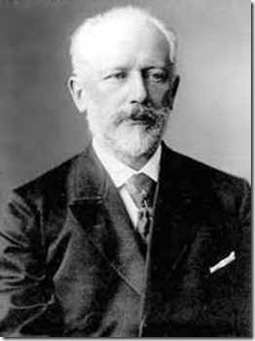
#9 - The Five and Pyotr Ilyich Tchaikovsky

9

During the 19th century, differing opinions occurred on the nature of classical Russian music. Tchaikovsky wanted to write professional compositions of such quality that they would stand up to Western scrutiny, and thus transcend national barriers, yet remain distinctively Russian in melody, rhythm and other compositional characteristics. The Five, which consisted of a circle of powerful composers who met in St.Petersburg, had the aim of producing a specifically Russian kind of art music, rather than one that imitated older European music, or relied on European-style conservatory training. The Five also believed in using the melodic, harmonic, tonal and rhythmic properties of Russian folk song, along with exotic melodic, harmonic and rhythmic elements from music originating in the middle- and far-eastern parts of the Russian Empire. While Tchaikovsky himself used folk songs in some of his works, for the most part he tried to follow Western practices of composition, especially in terms of tonality and tonal progression. However, the relationship between Tchaikovsky and The Five was quite friendly: In 1869 Tchaikovsky entered into a working relationship with Mily Balakirev (one of the members of the Five). The result was Tchaikovsky’s first recognized masterpiece, the fantasy-overture “Romeo and Juliet”, a work which The Five wholeheartedly embraced. Furthermore, when another member of the Five, Nikolai Rimsky-Korsakov, was offered a professorship at the Saint Petersburg Conservatory, it was to Tchaikovsky that he turned for advice and guidance, and during the 1880s, after the members of The Five had gone their separate ways, Tchaikovsky enjoyed a very close relationship with Rimsky-Korsakov.


#8 - Chesterton and Shaw

8

Chesterton’s most famous philosophical opponent was the Irish playwright, George Bernard Shaw. Shaw represented the new school of thought, modernism, which was rising at the time, while Chesterton’s views were increasingly focused towards the church. Nevertheless, they both maintained good-will, and had great respect for one other (It had been Shaw who had encouraged Chesterton to write a play, and claimed that the world was not thankful enough for Chesterton).

Their debates, in print and in public, were a subject of great amusement, and a source of one witty exchange after another:

Shaw: If I were as fat as you, I would hang myself.
Chesterton: If I were to hang myself, I would use you for the rope.

Chesterton: I see there has been a famine in the land.
Shaw: And I see the cause of it.


#7 - Martin Luther King and Malcolm X

7

To many, King and Malcolm X were heroes of the Civil Rights Movement, two towering icons of contemporary African-American culture. Their speeches reflected visions on improving America, and both men believed that if blacks were to attain freedom, they first needed to achieve self-respect. However, their intentions were delivered in different styles and purposes; King believed in peaceful demonstrations and arguments, and a non-violent approach to things, the same approach applied by Gandhi, while Malcolm X promoted nationalist and separatist doctrines, and for most of his life, he believed that only through revolution and force could blacks attain their rightful place in society. Thus Malcolm and King each became a focus of one of the opposing wings of the movement for equality that swept Black America, and the country, and their titanic struggle shook the nation and the world. Nevertheless, near the end of their lives, Martin Luther King and Malcolm X’s beliefs had become more similar. After his break from the black Muslim movement, Malcolm X emphasized unity and change through black pride, and respect for oneself, rather than through hate and revenge. Their relationship became more amiable with X expressing his interest to join forces with King and the progressive elements of the Civil Rights Movement.


#6 - Gilbert Lewis and Irving Langmuir

6

The two greatest American chemists of the first half of the twentieth century, Lewis and Langmuir were also famous rivals. Lewis had helped create the College of Chemistry at the University of California, Berkeley, and made it into one of the world’s most productive centers of chemistry research. His contributions to chemical bonding, chemical thermodynamics and theory of acids and bases had made Lewis a household name. Langmuir (above), in turn, had extended Lewis’ theory on chemical bonding and popularized it to a great extent, often to the annoyance of Lewis. Langmuir had been recipient of the Nobel Prize for his work on surface theory, while Lewis had been denied the covetous prize, despite a staggering 15 nominations. In 1946, Lewis’ lifeless body was discovered under a laboratory workbench at Berkeley, and while officials have reported the death to have been brought about by hydrogen cyanide, most believe it to be a suicide due to his relationship with Langmuir, and subsequent depression brought on by it. Indeed, on the day of Lewis’ death, Langmuir and Lewis had met for lunch at Berkeley, and Langmuir had expressed that he had been on the Berkeley campus that day to receive an honorary degree.


#5 - Thomas Jefferson and John Adams

5

With Ben Franklin ill, the task of conjuring the Declaration of Independence had fallen to John Adams. Adams however argued that Jefferson should draft it instead, and Jefferson’s draft was defended by Adams with much eloquence. However, from that point on the two had a less than amicable relationship. During Adam’s tenure as vice-president, the two argued vehemently on the nature of politics and the direction to lead the country. A heavily contested presidential election between the two was determined by only three electoral votes, and Adams became the second president of the United States. However, the bitter campaign was renewed in 1800, when Jefferson defeated Adams to become the third president. The two exchanged hostile letters on several occasions, and Adams famously declared “I will out live Jefferson”. On his death bed on July 4, 1826, Adams famously proclaimed “Thomas Jefferson survives”; however, unbeknownst to him, Jefferson had actually passed away a few hours earlier.


#4 - Freud and Jung

4

Freud met Jung in February of 1907, and the two established a firm friendship, and corresponded extensively over a period of six years. Freud had described the, then young, Carl Gustav Jung as his heir to psychoanalysis. However, as Jung began to expand his own theories and dissented with the basic tenets of Freudian theory, the relationship started turning sour. This eventually led to a highly hostile exchange of letters between the two, and Jung’s resignation as chairman from the International Psychoanalytic Congress, where he had been elected with support from Freud. Jung went on to form his own school of thought, known as analytical psychology, while Freud continued to develop his own views of psychology. They met for the last time in September, 1913, in Munich, where Jung developed some key concepts on psychological types in analytical psychology, that would come to distinguish Jungian theory and Freudian theory for the next 50 years.


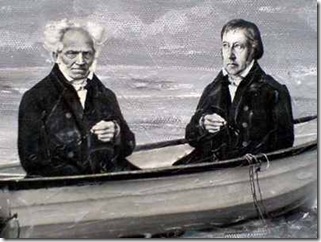
#3 - Schopenhauer and Hegel

3

Arthur Schopenhauer was a German philosopher whose metaphysical analysis of will, his views on human motivation and desire, and his aphoristic writing style influenced many well-known thinkers, including Friedrich Nietzsche, Richard Wagner, Albert Einstein, Sigmund Freud and Leo Tolstoy among others. Subsequently, Hegel was one of the creators of German Idealism, and his historicist and idealist account of reality as a whole had revolutionized European philosophy, and was an important precursor to Continental philosophy and Marxism. However, Schopenhauer was a strong critic of Hegel, often accusing him of deliberately using vacuous verbiage that sounded impressive, but was ultimately devoid of any content. Such was the hostility between the two, that in 1820 Schopenhauer became a lecturer at the University of Berlin, and scheduled his lectures to coincide with those of Hegel. However, only five students turned up to Schopenhauer’s lectures, while Hegel’s classes overflowed, causing Schopenhauer to retire from academia.


#2 - C.S. Lewis and J.R.R Tolkien

2

The Inklings were a literary discussion group which hosted several influential intellectuals of the 20th century, the two most prominent members being C.S. Lewis and J.R.R Tolkien (above). Tolkien and Lewis were close friends, and it had been Tolkien who had helped Lewis to convert to Christianity, whereas Lewis had encouraged Tolkien to expand his fictional writing; both taught at Oxford, both were interested in literature, and both wrote fictional books which propagated basic Christian themes and principles. They often narrated manuscripts of their works in progress to one another and The Inklings long before they were published. However, Tolkien expressed strong disapproval of Lewis’ Narnia books, citing that the Christian themes and messages were far too strong. Tolkien also never thought highly of Lewis’ attempt at popular theology, and believed that theology should be left to the professionals to avoid misinterpretations of key Christian themes. Nonetheless, Lewis dedicated his massively influential and popular “The Screwtape Letters”, which had landed him on the cover of Time magazine, to Tolkien. However, the rift between the two seemed to widen following Lewis’ growing affiliation with the Anglican church and his romance with American widow, Joy Gresham. After Lewis married Gresham, he grew apart from his old friends, and it is believed that Tolkien took it personally.


#1 - Werner Heisenberg and Niels Bohr

1

The world of the newly emerging quantum physics had been very much defined by the Danish scientist Niels Bohr. His contributions to the understanding of atomic structure and quantum mechanics had resulted in the Nobel Prize in 1922. During one of Bohr’s crucial lectures among a host of intellectuals, a young German student raised his hand and pointed out a mathematical flaw in one of his arguments. This left Bohr stunned, and he personally asked for the young man; this 20 year old was none other than Werner Heisenberg. The two, then, established a firm friendship that would last many years, and several collaborations, and Bohr was overwhelmingly pleased when Heisenberg, too, received the nod for the Nobel.

However, what science had brought together, politics would divide. Theoretical physics had been labeled as Jewish science due to the immense popularity of Albert Einstein, and Bohr, too, had Jewish connections. With the onset of the Second World War, Heisenberg was viewed with an eye of suspicion by the Gestapo and was eventually recruited by the Nazis to work on a project concerning development of the atomic bomb. In their final meeting, Bohr thought that Heisenberg supported the idea of developing an atomic bomb for the Nazis, and was appalled by the thought that Heisenberg showed no moral qualms towards the idea of the bomb. The friendship was strained. After the war the scientific community ostracized Heisenberg, and it would be some time before he would once again gain acceptance from both the scientific community and in his friendship with Bohr. However, the relationship was never to be restored to the same status. An excellent documentary documenting the relationship between the two and the politics involved can be found here.

read more...

Wednesday, July 14, 2010

10 Craziest Scientific Theories


Crazy is such an ugly word but how else can we describe these concepts? They each try to explain some aspect of our universe in a manner that just seems bizarre. Granted, most things in the universe are odd already, and we haven’t even begun to fully understand a fraction of it, but there’s something particularly disturbing about these theories. They express ideas that are too mindboggling and inconceivable, even for fellow scientists. While none of them have been verified or completely dismissed, we should still speculate because in a universe as crazy as ours, we just never know what might be true.


#10 - Ekpyrotic Universe

10

The ekpyrotic scenario provides an alternative to the widely accepted Big Bang theory. It suggests that, unlike the Big Bang that began from singularity, our universe is one of a pair of universes that collided. The effect of the collision resets the universe. From there, it expands for billions of light years (the way we imagine the Big Bang occurring) until it contracts back to the Big Crunch. The speed and energy of that reduction creates another massive collision and the universe is reborn. The cycle continues for infinity.

Did you catch the crazy part? This theory states there’s another universe out there. That’s not too strange considering we accept the possibility of parallel universes. But if the ekpyrotic scenario is correct, our twin universe is right next to us in another dimension, separated by a distance less than the diameter of an atom. That’s close, even for siblings.


#9 - White Holes

9

White holes, unlike their black hole neighbors, have not been studied because they only exist in an extremely hypothetical situation. In fact, there’s not even a clear understanding what a white hole could be. Is it the other end of a black hole? Is it a wormhole? Is it something else entirely?

Generally, white holes are thought to spit out matter, much like black holes eat matter. For this to happen, the matter that passes through a black hole would have to be protected during the voyage, avoiding the process of merging into singularity. No white holes have ever been detected, up to this point, and no black holes have been seen without an event horizon (the guarding force around a black hole that prevents us from seeing them) that may show us just how matter passes through. To do that, white holes would have to break a few laws of physics and reinstitute some ideas that have been discarded; that’s asking a lot. Until then, white holes are best left for hypothetical ideas or naughty jokes.


#8 - Dark Energy is Murder

8

According to Professor Lawrence Krauss, every time we look at dark energy, we’re killing the universe. Now dark energy, as you may recall, makes up 70% of the universe. It answers for all the invisible peculiarities we see in deep space. It’s also one of the most perplexing concepts that’s becoming more accepted nowadays. Why wouldn’t we try to explore it?

He suggests that the Big Bang was initiated when strange high energy with repellent gravity decayed into zero-energy; it went from a false vacuum to an ordinary vacuum causing the universe to happen. Now in quantum mechanics, there is what’s called the quantum Zeno effect. It states that if an unstable object is observed regularly, it will never decay. Krauss argues then, that under the same principle, if dark energy is continuously observed, we are keeping it unstable and reducing the universe’s lifespan by forcing it back to that state when it was a false vacuum. With our interest so high in the invisible dark energy that makes up the universe, it seems unlikely that astronomers will stop studying it. If Krauss is right, we’re doomed.

#7 - Matrix Universe

7

Does anyone remember that little movie that came out a few years ago? The protagonist could stop bullets and see time slow down as he fought his enemies. It was called the Matrix. Did you catch it?

If you haven’t, (been living under a rock much?) go check it out, because it might provide the ultimate answer to the universe: we live in a computer program. It surely seems like science fiction to say that one day computers will become so powerful that they will be able to simulate consciousness, but as technology advances, that crazy thought could become reality. In a simulated world, we could be trapped in the mundane until death or live out fantasies and never even realize we’re hooked up to a machine. Hell, for all we know, we’re in a matrix universe right now. Time to start a rebel team and escape, don’t you think?

#6 - Universe is a Hologram

6

On the subject of the unreal, there’s another theory that suggests we’re not in an elaborate computer program but that much of what we think is the universe is nothing more than a hologram made by the universe itself.

The idea is when we look at the night sky, we’re seeing a wall with an image on it (that includes all the galaxies and stars). This holographic principle might explain why the universe appears grainy on the most basic of energy scales. Remember that a holographic image is created when an object is bathed by the light of a laser and a second laser jumps off the first’s reflective surface (which is then recorded). A third light illuminates the image to reveal the holograph. If changes to gravity waves is caused by patterns of light, than it would simulate what is, essentially, the process of creating a holographic image. If this was proven, then it would change most of what we think we know about the universe.


#5 - Black Hole Babies

5

We could be the child of a black hole. The idea is, when matter gets pulled into a black hole, it becomes so dense before reaching singularity, that the black hole might spit it back out and form a universe from that very same matter.

In other words, a universe with many black holes would have created many baby universes. We still can’t detect exactly where black holes are located in our universe (though we can estimate their location by recording the movement of stars and planets around them) but that might just be because we’re a baby universe, a product of another universe’s black hole with insufficient means. This idea supports the possibility of the multiverse where there could be an infinite amount of universes.

#4 - Many-Worlds Interpretation

4

On the subject of an omniverse, the many-worlds interpretation takes a different approach explaining multiple universes. While I can tell you that this concept of quantum mechanics argues the objective reality of space but denies the reality of wavefunction collapse (or rather the condensing of physical possibilities into one single occurrence) but I go cross-eyed just thinking about that. Basically, the interpretation says for every decision we make, a new universe is born.

When you woke up this morning, did you brush your teeth? Another you may be living in a different universe where you didn’t, while you live in the universe where you did (I’m giving the present you the benefit of the doubt). After that, did you floss? Again, a separate universe exists depending on the outcome of your choice. Each decision then is played out in full until you come across another decision and another universe branches out from there. If this is the case, then there are an infinite amount of universes, each accounting for every person’s every decision.

#3 - Heat Death

3

The argument uses the second law of thermodynamics by stating that if the universe was infinite, it should also be infinitely old. Or to make that sound less daunting, a star one hundred light years away could only be there if the universe was at least one hundred years old (if the speed was constant, more on that later). So if the universe is infinitely old, heat death suggests everywhere should be the same temperature and there should be no stars in the sky because they all would have died out (or they should all be at the same cooled temperature).

The explanation: If the universe was infinitely old, then stars should be cool because they warmed their surroundings, making the temperature across the universe uniform. However, there are stars and the universe doesn’t have an equal temperature throughout (as detected by cosmic background radiation). This idea also only works if the speed at which the universe is expanding has remained constant because such ideas as cosmic inflation claim expansion is not always the same. When you have variables such as dark flow and dark energy also pushing and tugging on matter, heat death’s vision of a starless sky appears dim (slight pun intended).

#2 - Theory of Everything

2

The theory of everything will be the ultimate discovery. It would combine quantum mechanics and general relatively to solve all the riddles around us into a neat little package. It would be able to name all the physical constants in the universe, whether or not those constants vary over time, locate other fundamental elements in the unobservable universe (such as dark matter and dark energy), and so on.

But why mention it here? Well, to have a theory that would explain all the mysteries of a seemingly changing universe seems insane. Think of a screw trying to fit into hundreds of holes in a wall but every hole is a different size and shape and possibly in a different dimension or universe. That’s a big achievement but scientists hope to find a unified answer. The closest possibility we have right now is the M-theory, an extension of string theory.

#1 - Time Travel

1

What do Marty McFly, Dr. Who and Bill and Ted have in common? They’re time travelers. They were able to do the impossible and make the voyage through our perception of time. It should go without saying time travel comes with a whole universe of problems, making the possibility extremely unrealistic. Consider the following:

You go back in time and kill your father. Theoretically, you can’t kill him because then you wouldn’t be born to kill him. You do so anyway and it turns out, he isn’t your real father and you actually killed your step-father. You’re real father goes untouched and thus the past and present line up perfectly. Well, not yet. When you left the present to go into the past, there’s an issue about your body. Do you become a duplicate so you exist in your own present time and in the past or are you displaced from time itself and inserted in another? That also doesn’t make sense because if you follow the rules of what we perceive as time, you’d return to the past as a baby, if even that. What if you go back in time and kiss your high school crush, making him/her fall in love with you? That should alter the future where you lived by yourself that led you to go to the past in the first place. That kiss and its alteration of history keeps you from going to the past at all. If in that different chain of events you still go to the past to make it in time for that kiss, you’ll be trapped in a cycle. And consider that all these questions are only applicable if time is cyclical. If time is linear, your past, present and future aren’t constantly happening somewhere, making time travel impossible (there would be nothing to travel back to). If time was cyclical, this suggests that everything is preordained and you have no free will. What you think of as free will would already be recorded and whatever action you believe is different than the original action is actually the decision you were going to make anyway.

Don’t worry, I got lost along the way too. To simplify all this, we look to Stephen Hawking who provides us with one question that indicates whether time travel will ever be possible: Why aren’t we inundated with time travelers from the future? They should be here right now, knowing full well that we’re interested in such topics as time travel to explain just how they accomplish it from a future tens of thousands of years in the future. This isn’t the case because maybe this science fiction dream is just that: a dream.

read more...

Wednesday, July 7, 2010

10 Human Creations Attributed To Aliens


Since the beginning of humanity, people have invented explanations for things they don’t understand. The culprits for the unexplained have evolved from gods and demons, to ghosts and spirits, to extraterrestrials. A recent study showed that almost 1 in 4 Americans believe that, at least some of the reported UFO’s, are actually spacecraft from other worlds. Many people believe space aliens have visited Earth in the past – if they’re not here right now. Of course the vast majority of “evidence” of extraterrestrials have simple (albeit WAY less exciting) explanations. Here are 10 man-made things falsely attributed to extraterrestrial influence. Enjoy.


#10 - Ancient Cave Paintings

10

Discoveries of ancient artwork depicting mysterious figures have helped give rise to the “Ancient Astronaut Theory”, which claims that alien beings visited prehistoric humans, possibly interacting and sharing knowledge with them. Advocates of this theory usually point to specific examples, such as a particular rock carving in the Val Camonica site in Italy, as well as the Wandjina Petroglyph (above) sites in Australia. Using these examples as evidence reaches unsturdy ground when held up to scientific scrutiny. The popular image of two “alien” figures in Val Camonica was picked out of over 200,000 drawings – a pretty clear sign of confirmation bias. Testing at the Wandjina site showed some drawings had been repainted numerous times over, with the images evolving over time at the artists’ discretion, rendering the original artwork unknown.

#9 - Egyptian Carvings

9

According to many UFO enthusiasts, the Temple of Osiris at Abydos contains definitive proof of advanced ancient technology. The glyphs seem to include depictions of a helicopter, a jet plane and some sort of flying saucer. Unfortunately for believers, the glyphs are a result of erosion and actual replacement and re-carving of hieroglyphics. The original text is part of the titulary of Seti I, that had been changed to reference Ramsses II. Modifying and defacing inscriptions was common in ancient Egypt’s history, and in this case yielded some strange-looking results. Even stranger, UFO enthusiasts do not find it odd that there are no other examples like this in the thousands of hieroglyphs discovered elsewhere, nor is there any mention of flying machines anywhere in Egyptian literature.

#8 - Nazca Lines

8

The Nazca Lines are a series of hundreds of ancient geoglyphs located in Peru. These include depictions of animals, birds, fish and humans, along with simple lines and geometric shapes. Some of them are over 600ft. across and can only be viewed properly from the air. This has led to speculation by the Ancient Astronaut crowd that the ancient Peruvians were capable of advanced flight, or were trying to communicate with beings that were. Scientists have claimed the lines were of a spiritual significance, possibly pertaining to the availability of water. Also, historians have since recreated similar lines using primitive techniques without aerial assistance.

#7 - Antikythera Mechanism

7

The Mechanism is a clock-like instrument from around 85 BC, that was discovered in 1900 near Antikythera, Greece. It was used aboard ships as a navigation tool because it could accurately predict locations of the sun, moon and the 5 known planets, at any given date. The device contained a complex system of gears, built with sophisticated technology, that rivaled that of 14th century clocks. Because of the precision involved in it’s construction, it’s almost exact predictions of cosmic bodies, and the apparent 1300 year gap in technology, UFO enthusiasts have cited this as evidence of alien contact, as humans could have never figured it’s complex technology out that early. However, if aliens were to blame, they would have probably told the Greeks about more than just five planets, or at least given them a magnetic compass. Of course ancient Greek literature mentions mechanisms like this one without mentioning other-worldly visitors.

#6 - Saqqara Bird

6

Found in a tomb excavation in 1898, the Saqqara Bird has been rumored, by believers in the Ancient Astronaut Theory, to be evidence of advanced flight in ancient Egypt. They note the vertical tail of the “bird” resembles a tailplane on an aircraft as opposed to the horizontal tail feathers of a real bird. The lack of legs, and the angle of the wings has lent to speculation about the design’s capability of aerodynamic lift. Tests performed on recreations of the artifact have shown it to have no aerodynamic properties conductive to flight. Modern scientific theories suggest it’s either a religious artifact or even just a simple children’s toy.


#5 - Dogu

5

Dogu are small humanoid figurines created in prehistoric Japan. The unusual appearance of the Dogu has been claimed to resemble some sort of space suit, supposedly complete with goggles, armor and hoses. Adding to the mystery, their exact purpose remains unclear to historians. Ancient Astronaut proponents tend to ignore the fact that the “goggle-eyed type” figures are only one of many types of Dogu, and that archaeologists have pointed out the similarity of the figure’s eyes with Inuit snow goggles. They are seldom discovered intact, with limbs having been cut or broken off. This with the exaggerated hips, buttocks, and breasts depicted suggest a possible usage in fertility rituals.


#4 - Crop Circles

4

In 1966, a man claimed to have seen a saucer shaped craft over a field near Tully, Australia. The saucer allegedly left a circular pattern of flattened reeds over the area it had taken off from. Years later, this unique story inspired two English pranksters to create their own patterns of flattened crops in local fields, using simple tools. The fad quickly spread, and crop circles became increasingly complex and intricate. While some believe this is a result of alien technology advancing, or the increasingly complex nature of an extraterrestrial “message” to humans, the overwhelming majority of crop circles have been revealed as products of deception, artistic expression and/or business or tourist interests.

#3 - Norwegian Spiral

3

In December of 2009, an enormous spiral appeared in the sky over northern Norway, leading to speculation of an extraterrestrial visit. The unusual visual phenomenon lasted for 2-3 minutes, and consisted of a blue light originating on the horizon, which gained altitude, culminating into a large white pinwheel effect before disappearing “into a wormhole.” UFO enthusiasts cited this as evidence of extraterrestrial intelligence, while the official explanation from the Russian government wasn’t quite as fantastic. Apparently, a Russian military missile test went haywire, and the spiral effect was either a result of a broken stabilizer engine, or the missile circling an airborne misfire beacon until it ran out of fuel and fell into the sea.

#2 - Stonehenge

2

With it’s enormous stones dating past 2400BC, the purpose and construction methods of Stonehenge have long been debated. Humans are generally accepted to have built the actual monument, as comparably large stones have been erected in modern times using primitive tools. However, Ancient Astronaut theorists claim that the positions of the stones confirm an ancient ability to predict eclipses. This ability would mean the ancients had knowledge of lunar nodes – the two points in space where Earth’s orbit intersects the moon’s orbit. This knowledge wouldn’t be possible without extraterrestrial influence — or by generations of astute study that was continuously passed down and improved upon. Modern science obviously leans towards the latter, but it is possible that scientists have also attributed too much astronomical meaning to the placement of the stones.

#1 - Pyramids of Giza

1

Similar to many other megalithic sites around the world, the Pyramids of Giza have been repeatedly attributed to extraterrestrials throughout the years, mostly because of the sheer magnitude of their construction. According to believers, the technology needed to build the massive monuments was not available to the Egyptians during the time they were built. The cuts and placement of the stones are said to be so precise that we cannot recreate them even in modern times. The placement of the pyramids themselves and the measurements contained within are also said to support the Ancient Astronaut Theory, such as the height of the Great Pyramid being an accurate, scaled-down measurement of the distance between Earth and the Sun, or the three Giza Pyramids correlating with the constellation Orion. Modern measuring techniques have proven hopeful ideas like those to be false, yet the rumors persist. The Pyramids of Giza do display a remarkable knowledge of engineering and measuring for their time period, but one would think that if creatures capable of interstellar travel were actually responsible for them, they would have done a better job.

Bonus - Religions

b

Believers in extraterrestrials have also pointed to religious texts to support their claims of a previous visitation. Proponents often mention the imagery in the Book of Ezekiel, or the vimanas of Hindu Vedic texts, while some religions, like Raelism and Scientology, hold the belief of extraterrestrials as basic tenets of their faith. One thing some Ancient Astronaut theorists like to mention as a modern day comparison are the so-called Cargo Cults. These “cults” arose when the primitive, indigenous populations of isolated islands were exposed to visitors from civilized countries. For example, U.S. soldiers landed on the tiny island of Tanna, Vanuatu, during WWII to build airstrips for their fight against Japan. The tribal inhabitants viewed the soldiers as gods, and accepted gifts from them as rewards from their deities. When the soldiers left as quickly as they came, the inhabitants began recreating their “rituals,” such as marching in formation and building makeshift landing strips and planes, in order to continue the delivery of their divine “cargo.” Some ufologists have speculated that ancient religions may have developed the same way, with extraterrestrials acting the part of American soldiers.

read more...