Showing posts with label discovery. Show all posts

Monday, February 22, 2010

Top 10: Conspiracy Theories


#10 - Big Pharma

image

Almost everybody (except investors) loves to hate the drug companies. Drugs cost too much, drug company profits are obscene, and it seems that every few months some drug once claimed to be safe is yanked off the shelf after patients die. It's little wonder that the drug industry ("Big Pharma") is looked upon with suspicion. But some proponents of "alternative medicine" believe that drug companies actually conspire to keep people sick to reap profits. For example, Kevin Trudeau (bestselling author of "Natural Cures They Don't Want You To Know About") claims that important medical information is being kept hidden by a conspiracy between the medical establishment and big drug companies. According to Trudeau, "There are certain groups, including... the drug industry... that don't want people to know about cures for diseases..." Actress and model Jenny McCarthy appeared recently on "Larry King Live," accusing doctors and the pharmaceutical industry of conspiring to suppress evidence of a link between childhood vaccines and autism.

#9 - Satanic Cults
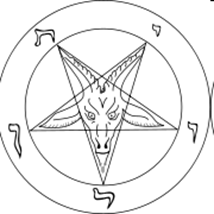
image Throughout the 1980s and early 1990s, a rash of child abuse cases horrified America. Children accused adults of ritual rapes, torture, and abuse, and the news media reported the sensational stories. Often the accusations included charges of Satanism. The pinnacle was Geraldo Rivera's infamous NBC special "Devil Worship: Exposing Satan's Underground," which aired on Oct. 28, 1988. Rivera relied on self-proclaimed "Satanism experts," misleading and inaccurate statistics, crimes with only tenuous links to Satanism, and sensationalized media reports. In what was the largest viewership for a documentary in television history, Rivera claimed that an organized, Satanic conspiracy was at work killing babies, murdering innocents, and conducting ghastly rituals. "There are over one million Satanists in this country," Rivera said, adding that "The odds are, [they] are in your town." Rivera presented no proof; the lack of evidence was seen as proof of how well organized and shrewd the Satanic conspiracy really was. Yet little evidence supports claims about Satanic cults or conspiracies. In a 1992 report on ritual crime, FBI agent Kenneth Lanning concluded that the rampant rumors of ritual murders, cannibalism, and kidnapping were unfounded. Phillips Stevens, Jr., associate professor of anthropology at the State University of New York at Buffalo, said that the widespread allegations of crimes by Satanists "constitute the greatest hoax perpetrated upon the American people in the twentieth century."

#8 - Protocols of the Elders of Zion

image "The Protocols of the Learned Elders of Zion" is a hoaxed book that purported to reveal a Jewish conspiracy to achieve world domination. It first appeared in Russia in 1905, and described how Christians' morality, finances, and health would be targeted by a small group of powerful Jews. The idea that there is a Jewish conspiracy is nothing new, of course, and has been repeated by many prominent people including Henry Ford and Mel Gibson. In 1920, Henry Ford paid to have half a million copies of "The Protocols of the Elders of Zion" published, and in the 1930s, the book was used by the Nazis as justification for its genocide against Jews (in fact, Adolph Hitler referred to the "Protocols" in his book "Mein Kampf"). Though the book has been completely discredited as a hoax and forgery, it is still in print and remains widely circulated around the world.

#7 - The Roswell Crash Cover-Up

image

There is one fact that almost all skeptics and believers agree on: Something crashed on a remote ranch outside of Roswell, New Mexico in 1947. The government at first claimed it was some sort of saucer, then retracted the statement and claimed it was really a weather balloon. Yet the best evidence suggests that it was neither a flying saucer nor a weather balloon, but instead a high-altitude, top-secret military balloon dubbed Project Mogul. As it turns out, descriptions of the wreckage first reported by the original eyewitnesses very closely match photos of the Project Mogul balloons, down to the silvery finish and strange symbols on its side. The stories about crashed alien bodies did not surface until decades later and in fact no one considered the Roswell crash as anything extraterrestrial or unusual until thirty years later, when a book on the topic was published. There was indeed a cover-up, but it did not hide a crashed saucer, instead it hid a Cold War-era spying program.

#6 - John F. Kennedy's Assassination

image

John F. Kennedy was killed in 1963 in a Dallas motorcade. Who killed Kennedy? Most (though not all) conspiracy theorists acknowledge that Lee Harvey Oswald shot Kennedy from a book depository. Beyond this fact lies a vast area of conspiracy theory that has spawned endless speculation and hundreds of books, articles, and films. Was there a second assassin, perhaps one at a nearby "grassy knoll"? And if Oswald did act alone, who gave him the orders? Activists against Fidel Castro? Organized crime bosses? A jealous husband upset with Kennedy's philandering? Though the Warren Commission report concluded that Oswald acted alone, a 1979 report by The House Select Committee on Assassinations suggested that there was in fact a conspiracy, and likely more than one shooter. In such a complex and sensational case, the conspiracy theories will live on.

#5 - Paul McCartney's Death
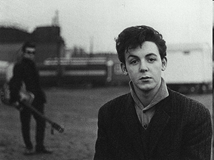
image According to many stories and conspiracy theories that circulated in the late 1960s, Beatles guitarist Paul McCartney died in 1966. The remaining members of the Beatles--along with their manager and others--conspired to keep McCartney's death a secret, going so far as to hire a look-alike and sound-alike to take his place in the band. Well, kind of: In a case of seriously twisted logic (even by conspiracy theory standards) the conspirators in this case took great pains to keep the press and public from finding out about McCartney's demise--yet they also wanted fans to know about it, and placed clever clues in album covers and music giving details about McCartney's death. For example, on the cover of the Abbey Road album, all four Beatles are photographed striding across a zebra crossing, but only McCartney is barefoot, and out of step with the other three. This must mean something, right? Despite public denials by the band, fans couldn't just let it be, and came together to look for more clues.

#4 - The Moon Landing Hoax

image

In the 1978 film Capricorn One, American astronauts and NASA faked a Mars landing. Though a mediocre film, it was an interesting idea, and one that would endure for decades. In 2001, Fox television aired the program "Conspiracy Theory: Did We Land on the Moon?," which rehashed many discredited "discrepancies" between the official version of the moon landing and photographs of the landing. (Curiously, they never explain why NASA would distribute photographs that would "prove" that they had faked the moon landing.) Web sites such as BadAstronomy.com have pages and pages of point-by-point, detailed refutations of the Fox claims. Of course, even if there was some credible evidence showing that the 1969 Apollo moon landing was a hoax, conspiracy theorists must also account for later moon missions, involving a dozen astronauts. And there's the issue of the hundreds of pounds of moon rocks that have been studied around the world and verified as of extraterrestrial origin... how did NASA get the rocks if not during a moon landing? Many astronauts have been offended by the implication that they faked their accomplishments. In fact in 2002, when conspiracy theorist Bart Sibrel confronted Buzz Aldrin and called him a "coward and a liar" for faking the moon landings, the 72-year-old punched Sibrel in the jaw.

#3 - Subliminal Advertising

image

Ever been watching a movie and suddenly get the munchies? Or sitting on your sofa watching TV and suddenly get the irresistible urge to buy a new car? If so, you may be the victim of a subliminal advertising conspiracy! Proponents include Wilson Bryan Key (author of "Subliminal Seduction") and Vance Packard (author of "The Hidden Persuaders"), both of whom claimed that subliminal (subconscious) messages in advertising were rampant and damaging. Though the books caused a public outcry and led to FCC hearings, much of both books have since been discredited, and several key "studies" of the effects of subliminal advertising were revealed to have been faked. In the 1980s, concern over subliminal messages spread to bands such as Styx and Judas Priest, with the latter band even being sued in 1990 for allegedly causing a teen's suicide with subliminal messages (the case was dismissed). Subliminal mental processing does exist, and can be tested. But just because a person perceives something (a message or advertisement, for example) subconsciously means very little by itself. There is no inherent benefit of subliminal advertising over regular advertising, any more than there would be in seeing a flash of a commercial instead of the full twenty seconds. Getting a person to see something for a split-second is easy; filmmakers do it all the time (watch the last few frames in Hitchcock's classic "Psycho"). Getting a person to buy or do something based on that split-second is another matter entirely. (The conspiracy was parodied in the 1980s television show Max Headroom, in which viewers were exploding after seeing subliminal messages called "blipverts.")

#2 - Princess Diana's Murder

image Within hours of Princess Diana's death on Aug. 31, 1997, in a Paris highway tunnel, conspiracy theories swirled. As was the case with the death of John F. Kennedy, the idea that such a beloved and high-profile figure could be killed so suddenly was a shock. This was especially true of Princess Diana; royalty die of old age, political intrigue, or eating too much rich food; they don't get killed by a common drunk driver. Unlike many conspiracy theories, though, this one had a billionaire promoting it: Mohamed Al-Fayed, the father of Dodi Al-Fayed, who was killed along with Diana. Al-Fayed claims that the accident was in fact an assassination by British intelligence agencies, at the request of the Royal Family. Al-Fayed's claims were examined and dismissed as baseless by a 2006 inquiry; the following year, at Diana's inquest, the coroner stated that "The conspiracy theory advanced by Mohamed Al Fayed has been minutely examined and shown to be without any substance." On April 7 of this year, the coroner's jury concluded that Diana and Al-Fayed were unlawfully killed due to negligence by their drunken chauffer and pursuing paparazzi.

#1 - The 9/11 Conspiracies

image

The evidence is overwhelming that the terrorist attacks of Sept. 11, 2001, were indeed the result of a conspiracy. There's no doubt about it: A close (or even cursory) look at the evidence makes it clear that it was carefully planned and executed by conspirators. The question, of course, is who those conspirators were. Osama bin Laden and the crew of (mostly Saudi) hijackers were part of the conspiracy, but what about President Bush and Vice-President Dick Cheney? Did top Bush advisors, including Paul Wolfowitz and Donald Rumsfeld, either collaborate with bin Laden, or intentionally allow the attacks to happen? Put another way, was it an inside job? Conspiracy theorists believe so, and point to a catalog of supposed inconsistencies in the "official version" of the attacks. Many of the technical conspiracy claims were debunked by Popular Mechanics magazine in March 2005, while other claims are refuted by simple logic: If a hijacked airplane did not crash into the Pentagon, as is often claimed, then where is Flight 77 and its passengers? Are they with the Roswell aliens at Hangar 18? In many conspiracy theories, bureaucratic incompetence is often mistaken for conspiracy. Our government is so efficient, knowledgeable, and capable--so the reasoning goes--that it could not possibly have botched the job so badly in detecting the plot ahead of time or responding to the attacks. I find that hard to believe.

read more...

The Top 5 Diet Myths Debunked

You buy wheat bread, watch the sweets, and have sworn off supersizing. But you still might be falling prey to some common diet myths. Read on to find out about the worst ones, and what you can do to outwit them.


#1. Myth: Cutting carbohydrates helps you lose weight.

image

Truth: Doing it the wrong way can also make you feel rotten and unhealthy.


Carbs are to this decade what fats were to the last: food demons. Truth is, though, you need them for energy. And, like with fats, some are better than others. Lona Sandon, RD, assistant professor in clinical nutrition at the University of Texas Southwestern Medical Center, suggests a minimum of 130 grams of carbs a day—a far cry from low-carb diets that start with 20 grams or less.

“Levels that low can leave you fatigued, constipated, and irritable,” she says. And those are just the short-term side effects. Eric Rimm, associate professor of epidemiology and nutrition at the Harvard School of Public Health, believes that long-term, an Atkins-style diet could increase risk of heart disease and colon cancer, perhaps due to the resulting increase in saturated fats.

Fad diets aside, what may matter most is how refined the carbohydrates are. Refining removes grains’ fibrous coating, which leads to digesting food faster than you should. That’s why whole fruits, with their fiber and nutrients, are good choices despite their simple carbohydrates. The best idea is to cut back on refined carbs such as soda and foods made with white flour, while loading up on healthier carbs like whole grains, fruits, and vegetables.


#2. Myth: Diet foods help you drop pounds.

image

Truth: They can actually do the opposite.


You may be doing yourself more harm than good by scanning labels for the lowest calorie and fat counts. “They may be less caloric, but they’re not necessarily better for you,” Sandon says. “Prepackaged diet foods can have a lot of sugar and trans fat.”

As with carbs, it’s the quality of the fat, not the amount, that makes the difference. Monounsaturated fats (found in nuts, olive oil, and avocados) and the polyunsaturated variety (in corn, soybean, and safflower oils) help your cardiovascular system, improve weight loss, and are crucial for absorbing beta carotene from vegetables like carrots. Trans fats and saturated fats, on the other hand, have been linked with heart disease and even cancer.

The Harvard Nurses’ Health Study vividly contrasts “good” and “bad” fats. It found that replacing just 30 calories of carbs a day with the same amount of trans fats nearly doubled the risk of heart disease. Replacing the same ratio of carbs with monounsaturated or polyunsaturated fats, on the other hand, lowered the risk of heart disease by 30 to 40 percent. So consider boosting your good fats by adding nuts to your morning cereal or some avocado to your salads. Just watch your overall daily calories to keep them in check.


#3. Myth: The more you cut calories, the more weight you’ll lose.

image

Truth: That can actually hurt you.


Cut your calories too far—below 1,200 a day—and you’ll end up with a double whammy that quickly decreases your metabolism and muscle mass, Sandon explains. To get the most out of the calories you do eat, she suggests that you choose whole foods such as produce, fresh meat and fish, and whole grains that are as close to their natural state as possible. They have a higher “nutrient density” than refined foods, because they pack more vitamins and minerals into fewer calories.


#4. Myth: Dairy makes you fat.

image Truth: Cutting dairy just shoots you in the foot (and fat cells).


Ask most dieters for a definite no-no (pre-Atkins, anyway), and cheese will top the list. But that’s “shooting yourself in the foot,” says Michael Zemel, PhD, a University of Tennessee professor of nutrition and medicine, and author of The Calcium Key (John Wiley & Sons).

Combined with calorie control, a dairy-rich diet can nearly double body-fat reduction and weight loss and help prevent weight gain, he says. Part of the reason is the hormone calcitriol, which helps conserve calcium for stronger bones while telling fat cells to convert less sugar to fat and burn more body fat. The result is leaner fat cells and a leaner you. So we advise sticking to the government’s latest dietary guidelines, which recommend three servings of low- or nonfat dairy a day. A cup of milk or yogurt, or 1 1/2 ounces of cheese equals one serving.


#5. Myth: Brown equals whole-grain.

image

Truth: There are lots of whole-grain poseurs out there.


“People buy caramel-colored wheat bread and think they’re getting a whole-grain product,” Harvard’s Rimm says, “but that’s not always the case.”

He advises looking for labels where “whole-wheat” or “whole-grain” top the list. It’s worth the extra effort: More and more research is finding that whole grains reduce your risk of many chronic ailments, from obesity and diabetes to cardiovascular disease. The extra fiber in whole grains is key. “It leads to satiety and reduces the speed with which the meal is absorbed,” Rimm says.

In essence, fiber makes you feel full, which means you eat less. It also helps level out the peaks and valleys of insulin that a meal produces. An added boost: Whole-grain foods tend to be higher in vitamins B and E than refined grains. So forget those barely grainy cereals and breads, and switch to ones that are truly whole-grain (with at least 3 grams of fiber per serving), making sure you get the recommended three servings a day.

read more...

Monday, February 15, 2010

The Strangest Little Things in Nature


When small cannot get any smaller, you enter the quantum world of quarks, photons, and space-time foam. You're welcome to take a look at this indivisible side of nature, but just remember to leave your common sense at the door.

People as far back as the Greek philosopher Democritus believed that things were built up from irreducible pieces. Isaac Newton himself thought that light was not a wave, but rather a collection of tiny "corpuscules." Physicists have only recently acquired tools with sufficient resolution to see nature's inherent graininess.

Here's a quick tour of the quantum underbelly of the things around us.

Matter

If you split a banana, and then split it again, and again, and again... you eventually get down to cells, molecules, atoms. Each atom has a nucleus of protons and neutrons, with tiny electrons buzzing around. Both protons and neutrons contain three quarks.

But the dissection stops there: electrons and quarks are the smallest pieces of ordinary matter.

How small are they? The electron is sometimes said be a few femtometers across (about a trillionth of a hair's width), but this is misleading. Electrons and quarks are more like puffy clouds than rigid balls.

This puffiness is the result of unavoidable quantum uncertainty: You can't precisely know a particle's motion and position at the same time. If you try to hold a quark still, you would have almost no idea where it is.

Such slipperiness makes exact size measurements meaningless.

Light

If we turn our scalpel on light, we find that its seemingly continuous glow is actually composed of little bundles of energy, called photons. Don't bother squinting your eyes to see them, though: a 100 Watt bulb emits a billion trillion photons per second.

So was Newton right? Light is a particle, not a wave? The answer is yes and no.

Light acts like a wave when you do an experiment looking for a wave property (like scattering through a pinhole). It behaves like a particle if you test for a particle property (like colliding with electrons).

"You get what you ask for" is a common refrain in quantum physics.

Rotation

Particle properties can be "quantized" as well. Probably the weirdest example is particle rotation (what is called spin) which, by the way, is nothing like how a planet or a top moves.

First of all, particles have only one rotation speed—they can't speed up or slow down.

And second, the axis of rotation depends on how you look at it. In an experiment, one detector might report a particle's spin points North, while another detector might say East. And they'd both be right!

Gravity

The force of gravity has largely resisted this quantum tomfoolery. But some physicists believe that Newton's apple fell from its tree thanks to gravitons—photon-like particles that carry the gravitational attraction.

Falling apples would not generate a lot of gravitons, but colliding black holes would. Detectors are currently looking for signals from these distant collisions, but it may be many years before any evidence for gravitons is found.

Vacuum

Even nothing acts strange at the smallest levels. The vacuum is presumably not really empty, but instead filled with "virtual" particles that constantly blink in and out of existence.

This virtual reality follows from a quantum rule that says probable events influence real outcomes. More specifically, it is possible (though highly unlikely) for particles and anti-particles to pop out of nowhere and then quickly annihilate. Nobody ever sees this happen, but the sum of all this quantum probability is a real energy.

Space and time

The above vacuum energy is not constant: it seethes and fizzles with bubbles the size of the Planck length (see box). This foam warps the fabric of space-time, blurring the answers to when and where.

Essentially, the underlying geometry of the world is not smooth. Instead, there are "pixels" that cannot be further resolved. Particles do not move continuously, but instead make little quantum leaps from one pixel to the next.

Such quantized space-time, though not yet observed, is the endpoint of smallness, as well as the end of this tour.

read more...

Thursday, February 11, 2010

The most important discoveries in the history of mankind


#1 - Steam Engineimage

The Steam Engine changed the future in 1712

The future then...

By pumping flood water from deep mines, steam engines like this set the Industrial Revolution in motion. They gave access to massive amounts of coal, helping the first factories to flourish. But using fossil fuels such as coal has created a new problem... climate change.

The future now...

What could be the carbon-free energy source of our future? Wind, waves and solar power are important. But if scientists could really crack nuclear fusion – the power source of the Sun and stars – we’d have an almost unlimited supply of clean energy.


#2 - Stephenson's Rocketimage

Stephenson's Rocket changed the future in 1829

 The future then...

Rocket was the world's first modern steam locomotive. Its design set the standard for 150 years. After Rocket's success the railways expanded quickly and for the first time huge numbers of people were able to move across the world... many in search of a new life.

The future now...

What could public transport look like in the future? One idea being tested at Heathrow is a network of personal driverless pods. Gliding along tracks, these 'pod cars' will take passengers non-stop to their destinations, cutting down on congestion and pollution. If they're a success, we could see pod cars in cities all around the world.


#3 - Electric Telegraphimage

The Electric Telegraph changed the future in 1837

The future then...

Two hundred years ago, people had to wait days, weeks or even months for letters to arrive by horse and ship. The electric telegraph changed all that. In the space of a few years, anyone in a large town could send a message hundreds of miles in just a few minutes.

The future now...

The web has radically changed our lives, but over three-quarters of the world’s people aren’t online. Imagine how our future will be transformed when everyone has access to mobile internet technology...


#4 - X-ray Machineimage

The X-ray Machine changed the future in 1895

The future then...

X-rays revolutionised how doctors detected disease and injury. For the first time we could see bones and other structures inside the living body - instead of relying on symptoms, samples or surgery.

The future now...

Today, new kinds of imaging technology allow us to 'see' inside our minds as well as our bodies. In the future, brain scanners might be used to record our dreams or even to detect what we're about to think - before we think it...


#5 - Model T Fordimage


The Model T changed the future in 1908

The future then...

The Ford Motor Company created the Model T by applying mass production techniques on a vast scale. This simple, affordable car brought motoring to the masses and changed manufacturing for ever.

The future now...

Mass production is still very important today, but what about the future? Production may shift from the factory to the home with a ‘3D printer’. In 20 years, instead of buying a new digital camera, we might download the design and ‘print’ it for ourselves.


#6 - Penicillinimage

Penicillin changed the world in 1928

The future then...

Penicillin transformed the treatment of infectious disease and saved countless lives around the world. The first of our modern antibiotics, it was a powerful weapon against diseases such as pneumonia and syphilis. Thanks to drugs like penicillin, we lead longer, healthier lives.

The future now...

Many scientists believe stem-cell therapy will transform the future of medicine. Stem cells can be grown into any type of cell in the body, so they could be used to grow new muscles, nerves and blood cells - or even complex organs.


#7 - V2 Rocket Engineimage

The V2 Rocket Engine changed the future in 1944

The future then...

The V2 rocket engine launched us into space. But as the power behind the first long-range missiles, it also threatened to destroy our world. An engine of war and discovery, the V2 has a legacy that still looms over us today.


The future now...

Rockets are fantastically expensive, so how else could we get into space in the future? One idea is a ‘space elevator’ to carry people and equipment into orbit. Vehicles could move up and down a super-strong cable connecting the Earth’s surface to an orbiting space station.


#8 - Pilot ACE Computerimage

The Pilot ACE Computer changed the future in 1950

The future then...

We take it for granted that we can surf the net, write documents or play music, all on one laptop. But Pilot ACE was the first computer that could do more than one thing. And for a while it was the fastest computer in the world.

The future now...

In the future, a new type of machine called a quantum computer could give us unimaginable calculating power. If someone figures out how to build one, it could crack currently unbreakable codes and lead to all kinds of life-changing discoveries...


#9 - DNA Double Heliximage

The DNA Double Helix changed the future in 1953

The future then...

Using this model, Francis Crick and James Watson revealed the structure and beauty of DNA to the world. In doing so, they established DNA as the code for life on Earth.

The future now...

In the future, it may be possible to design entirely new life forms using DNA. Scientists can already build genes from scratch and create microbes that can, in turn, produce drugs and green fuels, and even clean up pollution.


#10 - Apollo 10 Capsuleimage

The Apollo 10 Capsule changed the future in 1969

The future then...

It's Apollo's anniversary too – 40 years ago, three astronauts travelled to the Moon and back, inside this cramped capsule. The success of the mission paved the way for the Apollo 11 Moon landing two months later – humankind's first steps on another world.

The future now...

Scientists would love to return to the lunar surface, but where else could we be landing in the future? For years people have talked about a mission to Mars, but some experts now think an asteroid could be the next stop.

read more...